
Choosing the right automated gate for your driveway shapes daily access, property security, and curb appeal. For a homeowner in St. Louis, the best design must also account for driveway space, traffic flow, slope, and wind exposure so the gate opens and closes smoothly through changing weather conditions.
From swing gates to sliding options, each style offers different benefits for clearance, durability, and access control. Operator strength, hinge or track layout, and safety sensors all influence performance. The goal is to select a system that fits your entrance, supports reliable closing, and reduces strain on parts over time. You’ll learn how residential automatic gates differ, what driveways they suit best, and how to narrow choices based on function, style, and long-term maintenance needs. You can also compare materials and accessories, such as keypads, remotes, and smartphone controls, to support everyday convenience.
Understanding Automated Gate Systems
An automated gate system is more than an electric gate. It combines the gate, an operator that moves it, and an access control setup that tells it when to open or close. Codes, buttons, and other entry methods send signals to the system, making daily access feel simple and secure.
Many homeowners choose gate automation because it allows entry and exit without leaving the vehicle. A well-designed automatic gate system can enhance access control, improve convenience, and ensure long-term durability.
For a complete breakdown of how signals, operators, and safety parts work together, read What Are Automated Gate Systems and How Do They Work?
Key Components of Automated Gate Systems
An automatic gate system consists of several components that work together. The gate itself can be built from different materials and designed to match the property’s style. The gate operator (motor) powers the gate’s movement and must be sized appropriately for the gate’s weight and daily cycle to minimize wear on components.
Access devices, such as remotes, keypads, and intercoms, send signals to the operator through the control board. Safety sensors detect obstructions, enabling the system to stop or reverse. Hardware also matters: swing gates rely on hinges, while sliding gates use tracks and wheels. Strong, quality parts help support reliable movement over time.
How Automated Gate Systems Work for Driveways
When you press a remote button or use a keypad, the access device sends a signal to the operator. The motor engages, and the gate moves along its track or on its hinges to open or close the entry point. Settings control speed, travel limits, and closing behavior.
Safety features are built in to reduce the risk of vehicle or property damage. Photo-eye sensors and edge sensors detect an obstruction and trigger a stop or reverse response. If the gate begins acting inconsistently, professional repair services are the safest option, especially for operator issues, wiring faults, or sensor alignment problems.
Factors to Consider When Choosing Driveway Gates
Choosing a driveway gate is about fit, function, and how the entry supports your property. The right design should match your home’s style, improve curb appeal, and support stronger access control. Because the gate is one of the first features visitors notice, selecting the right style and material can also help long-term property value.
A professional consultation can make the decision easier. An expert can review your security and convenience goals, then recommend a gate style that aligns with your fence installation, driveway layout, and daily use needs.
Driveway Space and Layout Assessment
The driveway layout directly affects which gate type works best. During a consultation, a professional measures the opening width, evaluates clearance on both sides, and checks slope or uneven ground. Sliding gates often work well when there is enough side room for the gate to travel. Swing gates require clearance on both sides and may be constrained by steep slopes or tight driveways, in which case bi-fold or vertical lift options may be a better fit.
It also helps to consider how the entry is used. Large vehicles, frequent daily cycles, and pedestrian access can influence gate size, operator strength, and accessory selection. Automatic systems add convenience, but they also require professional support when performance becomes inconsistent.
Security, Convenience, and Curb Appeal
Automated gates can support three priorities: security, convenience, and curb appeal. Strong materials and a stable frame enhance security and reduce strain on components. Access control options such as remotes, keypads, and smartphone control make daily entry easier without leaving the vehicle.
Material choice also shapes appearance and durability. Common options include:
- Wrought iron or steel: Strong, classic appearance, high security
- Aluminum: Lightweight, corrosion-resistant, modern style
- Wood: Warm, natural design, higher upkeep needs
The best setup balances reliable operation with a design that complements the property and supports long-term durability.
Types of Automated Gates for Residential Driveways
Homeowners in St. Louis typically choose from several types of automatic gates based on driveway clearance, slope, and property style. The most common options are swing gates and sliding gates, with specialty designs available for tighter spaces. Materials also vary: metal options are favored for durability, while wood is often selected for a classic appearance.
Understanding how each gate style functions makes it easier to select a system that fits your driveway and supports reliable daily operation.
Swing Gates: Classic Functionality and Appeal
Swing gates open on hinges like a door. They can be single-panel or dual-panel designs that meet in the center. This style works well for properties with enough clearance for the gate to travel inward or outward.
Space and grade matter. Swing gates perform best on flatter driveways, with stable posts and strong hinges that can handle the gate’s weight and ongoing tension. With quality hardware and the right operator, swing gates can deliver dependable access and a traditional entry style.
Sliding Gates: Space-Efficient & Modern Design
Sliding gates move sideways along a track rather than swinging. This makes them a practical choice for tight driveways, sloped entries, or areas with limited swing clearance. Many homeowners also prefer sliding gates for a clean, modern appearance and strong access control.
Long-term performance depends on track alignment and the condition of rollers and drive parts. Keeping the gate path clear and scheduling regular maintenance helps reduce wear and supports smoother daily movement.
Bi-Folding and Vertical Lift Gates: Specialty Applications
Bi-folding gates fold inward as they open, using less clearance than a standard swing design. They often suit shorter driveways with limited space near the opening.
Vertical lift gates travel straight upward and are suitable when there is no room for swing or slide travel. These specialty options are often selected for steep sites or compact layouts, and they can be built from materials such as aluminum or vinyl for lower maintenance.
Gate Automation Options From Professional Gate Companies
After selecting a gate style, the next step is to choose the appropriate gate automation system. Professional gate companies typically recommend established operator brands because long-term reliability depends on both the equipment and the installation quality. Matching the operator to gate weight, gate length, and daily cycle needs helps reduce wear on parts and supports smoother operation.
Working with an expert also helps ensure access control and safety parts are installed correctly. A professional can align the operator, confirm settings, and verify sensors to ensure the system operates reliably and responds appropriately in daily use.
To understand which safety devices matter most before you upgrade or install, read What Safety Features Should an Automated Gate Have?
Selecting the Right Gate Automation System
Operator selection should be based on gate size, gate weight, driveway conditions, and the number of times the gate will open and close each day. An underpowered operator can struggle, wear faster, and create inconsistent movement. During a consultation, a technician can recommend an operator rating and help you choose access control options such as remotes, keypads, or intercom entry based on how the entry point is used.
Strong performance comes from the whole system working together: operator, access controls, safety sensors, and hardware. High-quality parts, when properly installed, typically deliver better long-term reliability.
Integration With Smart Home Technologies
Modern gate automation can also connect with smart home systems for more control. With a supported setup, you can operate the gate from a smartphone, manage temporary access for guests or short-term visits, and receive activity alerts when the gate opens or closes.
Key smart features often include:
- Smartphone control from anywhere
- Temporary access codes for guests or short-term visits
- Real-time notifications for gate activity
Comparing Gate Installation and Ongoing Gate Maintenance
Selecting an automated gate is only the first step. Professional installation is essential because alignment, wiring, operator setup, and safety sensor placement all affect how smoothly the gate operates and how long key components last. A properly installed system usually delivers more consistent closing, better access control, and fewer early service issues.
Ongoing regular maintenance is just as essential. Routine checks help identify wear early, support durability, and reduce the risk of sudden breakdowns.
For a clear guide on service intervals and what to check, read How Often Do Automated Gate Systems Need Maintenance?
Average Cost Considerations for Gate Installation
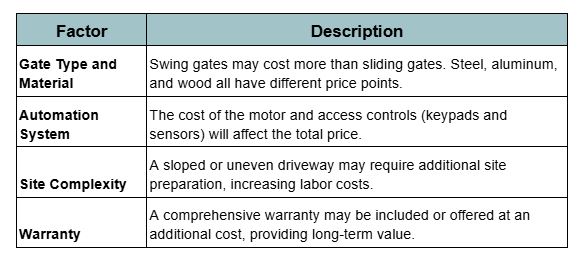
Gate installation requirements vary based on gate style, material, and driveway conditions. A professional assessment typically reviews gate weight, clearance, slope, and automation requirements to ensure the operator and safety components match the site. Precise planning at installation helps limit future strain on parts and improves long-term reliability.
Gate Maintenance Needs and Service Intervals
To keep automated gate systems reliable, schedule routine inspections and checks. Apply proper lubrication to hinges, rollers, and drive parts as needed; keep tracks clear; inspect wiring; and test safety sensors. Most residential gates benefit from annual service, while high-use systems often need checks twice per year.
Pay attention to early warning signs such as unusual noise, slow movement, or inconsistent closing. Catching issues early helps reduce damage to parts and supports smoother daily operation.
For a quick comparison of common automatic gate styles and where each one fits, review Angi’s overview of automatic gate types.
Gate Repair and Emergency Services in St. Louis
Even with regular maintenance, automated gate systems can still develop problems over time. When that happens, fast gate repair services in St. Louis help restore safe access and reliable operation. Issues can range from minor adjustments to failures that stop the gate from opening or closing correctly. A trained technician can diagnose the cause and restore proper functionality while reducing further damage to parts.
Emergencies are most critical when a gate is stuck open or fails to secure the entry point. Many repair providers offer emergency support, enabling homeowners to restore access control and reduce security risks quickly.
Common Gate Repair Issues
Automated gates include mechanical and electrical parts that wear with daily use. Sliding gates can develop track or roller problems that affect alignment and movement. Swing gates often experience hinge wear, which can cause sagging and poor closure.
Electrical issues also occur, including operator failure, gear wear, sensor misalignment, or control board faults. Common causes of repair include:
- Track damage or shifting alignment
- Gate springs are wearing out or snapping
- Operator or gear failure
- Sensors failing or moving out of position
- Impact damage from a vehicle or object
Availability of Emergency Automated Gate Services
A gate failure after business hours can leave the property exposed or block vehicle access. Emergency automated gate services address urgent issues, such as gates stuck open or closed, or sudden damage that affects safe operation. Keeping a trusted local service contact available helps reduce downtime and supports faster recovery when a problem happens.
Durable Automated Gates for St. Louis Homeowners
For a homeowner in St. Louis, durability matters because local weather conditions shift from hot, humid summers to cold, icy winters. Higher humidity near the Mississippi River can also accelerate corrosion of exposed metal. Selecting strong materials and the right finish helps an automated gate system stay reliable, reduce damage risk, and maintain a clean appearance over time.
Choosing a system designed for local conditions and supported by proper installation can help the gate operate smoothly year-round and reduce strain on parts.
For driveway entry design inspiration that pairs well with automated layouts, read Bob Vila’s driveway entrance ideas.
Material Choices for Long-Lasting Automated Gates
Gate material affects durability, upkeep needs, and long-term performance. Metal options such as steel and aluminum are common for strength and stability in changing weather conditions. Wrought iron and galvanized steel can provide strong security when properly coated to prevent rust. Aluminum is lightweight and corrosion-resistant, making it a popular low-maintenance option. Wood offers a classic style but needs regular sealing or staining to reduce moisture damage. Vinyl resists corrosion and rot, though it may not provide the same level of protection as metal.
- Steel: Strong security and durability when properly coated
- Aluminum: Corrosion-resistant and lower upkeep
- Wood: Traditional appearance with higher upkeep needs
- Vinyl: Easy cleaning and weather resistance, lower security than metal
A solid warranty can also signal confidence in long-term durability.
Working With a Trusted Gate Company for Quality Installation
Long-term reliability depends heavily on correct installation. A professional team can balance the gate, set operator limits, confirm safety sensor response, and verify smooth movement. Proper setup reduces early wear and helps the system operate more consistently.
When selecting a gate company, prioritize proven experience, clear communication, and warranty support. A qualified technician can also explain daily operation and outline regular maintenance steps that protect durability over time.
Understanding the types of automated gates available for a driveway helps a homeowner strengthen access control, improve daily convenience, and enhance curb appeal. Each style, swing gates, sliding gates, and bi-folding designs, fits different space limits, driveway layouts, and long-term durability goals. Selecting the right operator, safety sensors, and accessories also supports smoother movement and more reliable closing over time.
Guardian Door & Gate supports St. Louis homeowners with automated gate selection, installation, and ongoing service backed by experienced technicians. If you want help choosing the right automated gate for your driveway or planning an upgrade, contact us or call today to discuss options that suit your property.
Frequently Asked Questions
Do gate repair companies also handle new gate installation?
Yes, many providers offer both gate repair and new gate installation. We can help match gate style and material to the driveway, and handle installation, operator setup, access control setup, and safety sensor testing to ensure the system operates reliably.
What maintenance helps reduce the need for repairs?
Routine inspection and cleaning help a lot. Keep the travel path clear, clean photo-eye sensors, tighten loose hardware, and apply the correct lubrication to hinges, rollers, and drive parts when needed. Regular professional checking helps catch worn parts early.
What are common issues that require gate repair?
Common issues include track misalignment on sliding gates, worn hinges on swing gates, operator or gear problems, remote or keypad failures, and sensor alignment issues. Impact damage can also bend frames or shift alignment, which affects smooth opening and closing.
Should I handle automatic gate repairs myself or call a professional?
For automatic gates, professional service is the safer option. These systems include electrical parts, motor settings, and safety sensors that require correct calibration. DIY work can create unsafe operation or lead to additional damage to parts.
What gate materials are most durable for residential properties?
Steel and aluminum are popular for their durability. Steel offers strong security when properly coated to prevent rust. Aluminum is corrosion-resistant and requires less maintenance. Vinyl can also perform well with lower maintenance, though it may not provide the same level of security as metal.
How often should automated gate systems be serviced?
Many residential systems benefit from annual service, while high-use gates often require twice-yearly inspection. Service typically includes inspection, lubrication as needed, sensor testing, operator checks, and hardware tightening to ensure reliable operation.
What types of automatic gates work best for tight driveways?
Sliding gates are often a strong option for tight layouts because they slide sideways rather than swing. Bi-folding gates can also reduce clearance needs. Vertical lift gates may be suitable for sites with limited space for swing or slide travel.
What are the most common types of automatic gate systems?
The most common types are swing gates and sliding gates. Specialty options include bi-folding gates and vertical lift gates for space-limited entries. The best choice depends on the driveway layout, clearance, and the gate’s daily cycle.
What are the advantages of automated sliding gates?
Automated sliding gates save space, accommodate sloped driveways, and often perform better in wind than swing gates. With a properly aligned track and quality rollers, they can deliver smooth operation and strong access control for residential driveways.