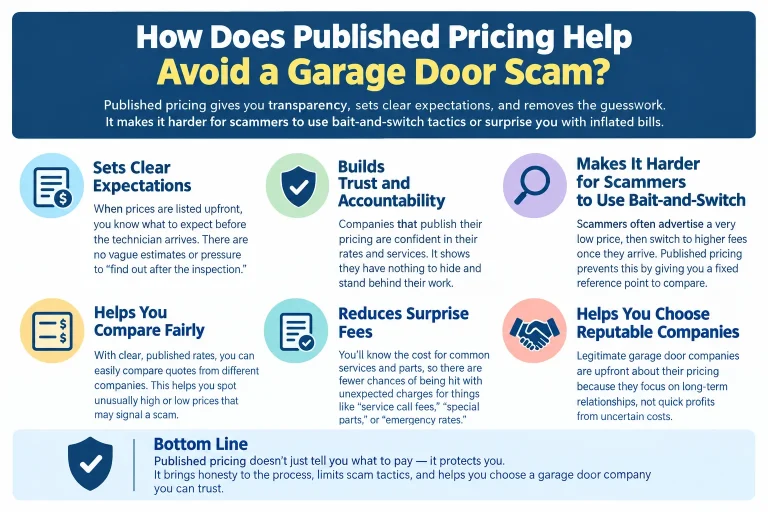
Seeing costs listed clearly before scheduling a garage door service gives homeowners something concrete to compare with an in-person quote. Published pricing removes much of the uncertainty a dishonest operator relies on to inflate a bill once the visit begins.
Transparent pricing helps defend against fraud for several reasons, each tied to how a scam typically unfolds from the first call onward. This guide breaks down what counts as genuinely published pricing, why it protects against scams, and what to do when pricing stays hidden.
Key Takeaways
- Published pricing gives homeowners a benchmark before any technician arrives.
- Hidden rates remove accountability and can lead to inflated bills.
- Legitimate companies rarely hesitate to post detailed pricing online.
- Comparing published rates across companies exposes unusually low or high quotes.
- Reporting a scam uncovered by missing pricing helps protect other homeowners.
What Counts as Genuinely Published Pricing?
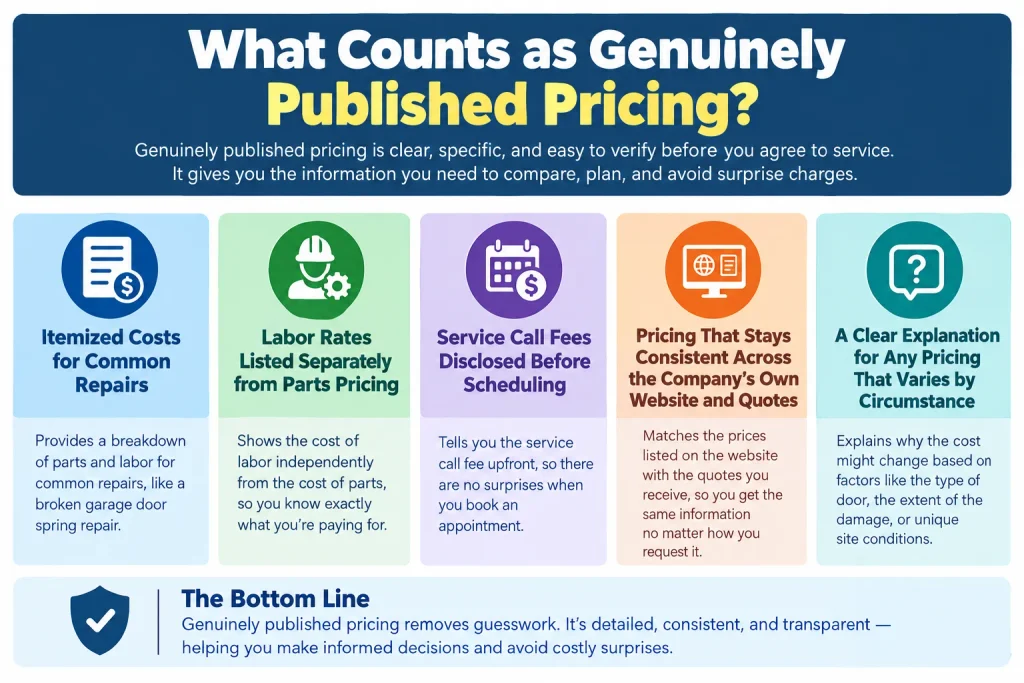
Genuine published pricing lists specific costs tied to specific services, not a vague range designed to cover every possible outcome.
A real listing usually includes each of these:
- Itemized costs for common repairs, like a broken garage door spring repair.
- Labor rates listed separately from parts pricing.
- Service call fees disclosed before scheduling any appointment.
- Pricing that stays consistent across the company’s own website and quotes.
- A clear explanation for any pricing that varies by circumstance.
Confirming these elements before trusting a listed price protects you from a number that never reflects reality once the bill arrives.
Why Does Seeing Costs Upfront Deter a Scam?
Costs published in advance remove the flexibility a dishonest operator needs to inflate a price once real work actually begins on-site.
| Mechanism | How It Protects | Result |
| Removes Bait-and-Switch Room | Locks in a number before any visit begins | Prevents a price from climbing once a technician arrives |
| Forces Pricing Consistency | Applies the same rate to every customer quoted | Exposes special “deals” designed to pressure a quick decision |
| Provides an Upfront Benchmark | Gives homeowners a number to compare against | Reveals whether an in-person quote seems unusually high |
| Creates a Public Paper Trail | Ties specific pricing to the company’s own name | Makes false claims about pricing harder to walk back later |
| Signals Confidence in Rates | Shows a company willing to stand behind its own numbers | Suggests legitimate, accountable business practices |
Trust in a repair estimate grows once the numbers on paper actually match typical repair costs and what happens during the visit itself.
Removes the Room Needed for a Bait-and-Switch
Published prices lock in a specific number before any technician steps onto the property, leaving little room to renegotiate once the visit starts.
This locked-in structure closes off a few common tactics:
- Claiming the advertised price only covered a diagnostic visit.
- Introducing a dramatically higher number once work starts.
- Offering a vague justification for why the quoted price no longer applies.
- Pressuring approval of a new total without any written explanation.
- Discouraging comparison against a competitor’s published rate.
Locking in pricing before any visit begins closes the door on this entire tactic, protecting the homeowner from the very first phone call.
Forces Consistency Across Every Customer Quoted
Published prices lock in a specific number before any technician steps onto the property, leaving little room to renegotiate once the visit officially starts.
Inconsistent pricing tends to show up in one of these forms:
- Claiming the advertised price only covered a diagnostic visit.
- Introducing a dramatically higher number once work starts.
- Offering a vague justification for why the quoted price no longer applies.
- Pressuring approval of a new total without any written explanation.
- Discouraging comparison against a competitor’s published rate.
Locking in pricing before any visit begins closes the door on this tactic, protecting the homeowner from the very first phone call.
Gives Homeowners a Benchmark Before Any Visit
Published numbers give homeowners something concrete to reference before a technician ever arrives at the property.
Watch for these red flags against the posted number:
- An in-person quote significantly higher than the posted rate.
- Missing explanation for the gap between published and quoted pricing.
- Reluctance to honor the number originally listed online.
- Pressure to accept a total without referencing the published rate.
- Published pricing that never actually matches what gets charged.
Referencing this number before approving anything protects against an inflated quote catching a homeowner off guard.
Creates a Paper Trail Tied to the Company’s Name
Pricing published under a specific company name creates a lasting public record tied directly to that business.
This record typically supports a homeowner in these ways:
- Documentation available if a pricing dispute arises later.
- A reference point for reporting inconsistent or dishonest pricing.
- Public accountability tied to a searchable business name.
- Evidence available to a consumer protection agency if needed.
- A record that persists even if a specific technician changes.
Documentation this public rarely exists for an operation planning to disappear after one job, since a real paper trail works against that kind of exit strategy.
Signals Confidence in the Company’s Own Rates
Companies willing to publish specific numbers signal confidence that those numbers reflect fair, defensible pricing.
Confidence in pricing tends to look like this:
- Pricing displayed prominently on the company’s own website.
- Willingness to explain the reasoning behind listed costs.
- No hesitation when a homeowner references the published rate.
- Consistent messaging between marketing materials and actual invoices.
- Openness to comparison against a competitor’s published pricing.
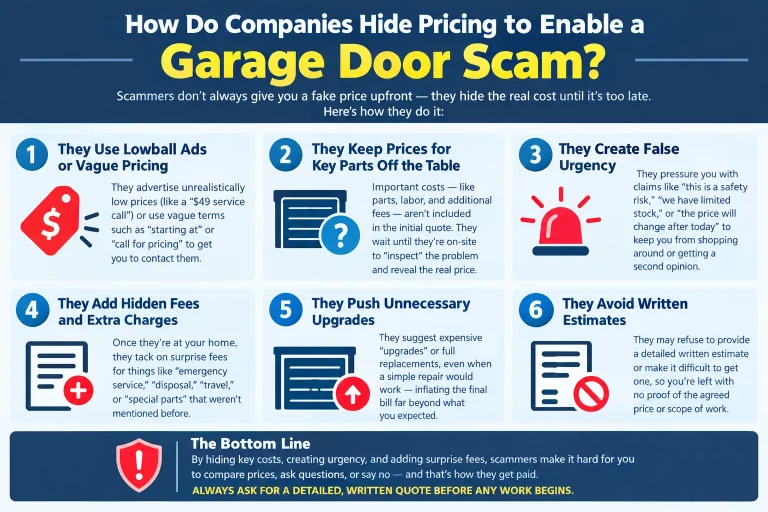
To trace exactly why a company avoiding this transparency raises legitimate concern, read our guide on How Do Companies Hide Pricing to Enable a Garage Door Scam, which covers the specific motivations behind that avoidance.
What Happens When a Company Keeps Rates Hidden?
Repairs involving a garage door opener or any other component become harder to trust once no published pricing exists to reference.
Hidden pricing tends to produce these outcomes:
- Verbal quotes that shift dramatically once a technician arrives.
- Missing benchmark to confirm whether a quote seems fair.
- Difficulty comparing costs across multiple companies beforehand.
- Pressure to accept an unverified total without any reference point.
- Reduced accountability once nothing gets tied to a public number.
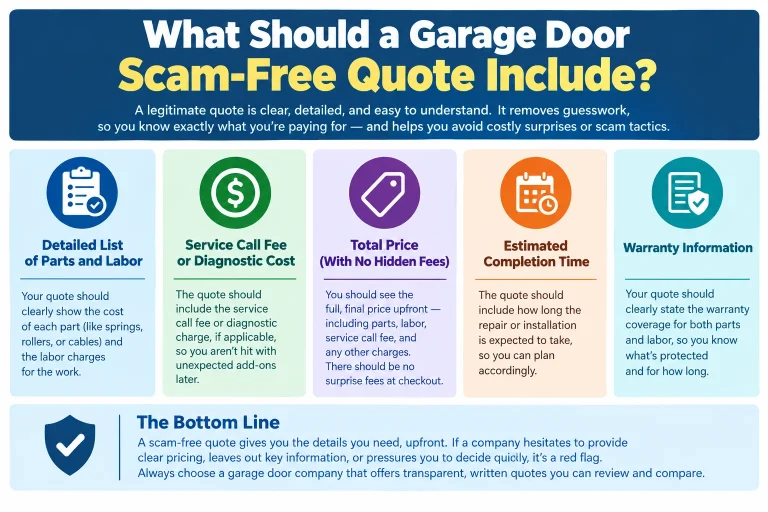
To confirm exactly which questions expose this kind of pricing concealment before approving anything, read our guide on What Should a Garage Door Scam-Free Quote Include?, which covers what a legitimate estimate should always contain.
What Should Homeowners Look For in a Posted Rate Sheet?
Trustworthy rate sheets list specific services alongside specific costs, not a vague promise to call for pricing.
A trustworthy sheet checks out against these points:
- Itemized pricing for common repairs and installation services.
- A clear breakdown separating labor costs from parts pricing.
- Contact information matching the company’s physical business address.
- Consistency between the posted rate sheet and actual invoices given.
- No vague disclaimers that undermine the listed pricing entirely.
Reviewing a rate sheet against common warning signs confirms whether the numbers reflect genuine, defensible cost.
How Should Transparency Change the Way Homeowners Shop?
Comparing published rates across several companies reveals whether a specific quote reflects fair market pricing or something worth questioning.
Shopping with transparency in mind looks like this:
- Checking multiple companies’ garage door installation pricing before scheduling any visit.
- Requesting a written estimate that matches previously published rates.
- Asking directly why a quote differs from the number listed online.
- Treating unusually low prices as a reason for caution, not relief.
- Declining to proceed with any company that resists this comparison.
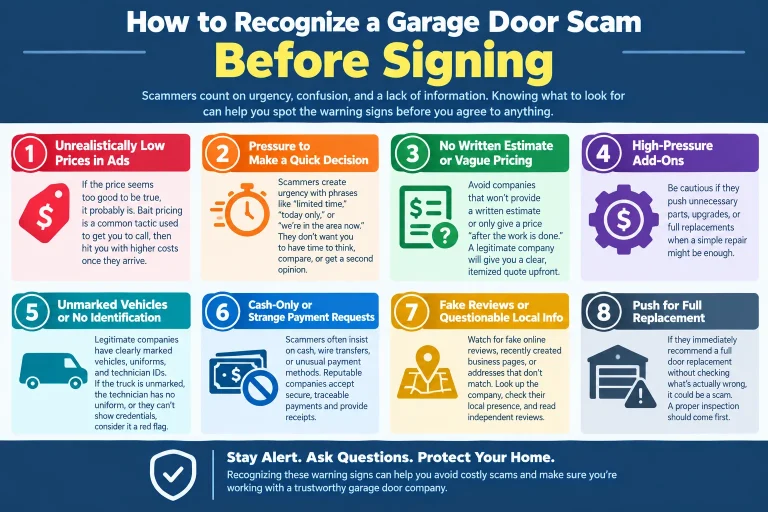
To walk through exactly how these shopping habits help identify a scam before signing anything, read our guide on How to Recognize a Garage Door Scam Before Signing, which covers each specific warning sign worth checking.
How to Report a Scam Uncovered by Missing Pricing
Missing or inconsistent pricing that exposed a scam deserves a report to the right authorities, not just a personal lesson learned.
Proper documentation follows these specific steps:
- Filing a complaint with the Better Business Bureau in the company’s area.
- Reporting the incident to a local consumer protection agency.
- Disputing any charge directly with the credit card provider used.
- Documenting the missing pricing information as supporting evidence.
- Warning other homeowners through detailed, factual customer feedback.
Filing a report through a documented process helps protect other homeowners from encountering the same operation later on.
Published Pricing Remains One of the Simplest Scam Defenses
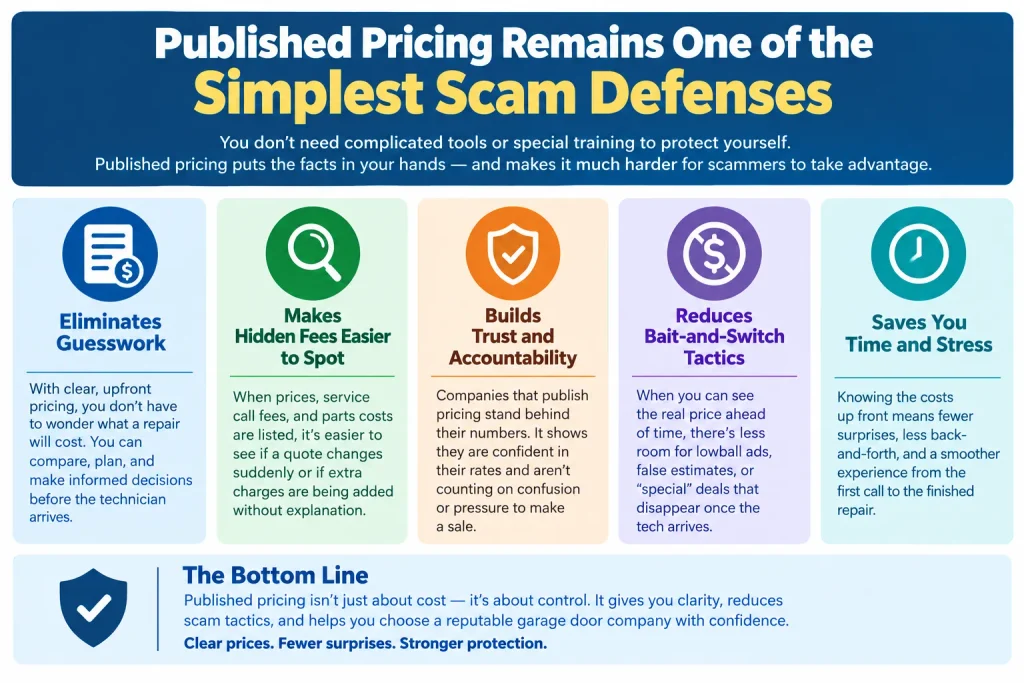
Costs listed clearly before any visit protect homeowners in ways that a verbal promise never can, especially once real money is on the line. Confirming published pricing before scheduling any repair blocks many of the tactics a dishonest operator uses to inflate a bill once the technician is already in the driveway.
Guardian Door & Gate publishes clear, upfront pricing for homeowners throughout St. Louis, MO, no matter how large or small the job becomes once the technician arrives. Contact us or give us a call today, and let our trained technicians confirm the exact cost before any work begins, so nothing gets left to assumption.
Frequently Asked Questions
Is a price range instead of an exact number still considered published pricing?
A reasonable price range can still count as legitimate published pricing, as long as it stays realistic and reflects the average cost the garage door company actually charges. An extremely wide range designed to cover any possible outcome deserves closer scrutiny.
How can a homeowner verify pricing listed on a company’s website is genuine?
Comparing the listed pricing against actual invoices from past customers, when available, usually confirms whether the numbers hold up. Checking a phone number against listings on Google Maps adds another layer of verification before approving anything.
Does hidden pricing always indicate a company is dishonest?
Hidden pricing does not always indicate dishonesty, since some legitimate companies, including smaller local companies, simply have not published detailed rates yet. Checking reviews of reputable garage door companies in the area can still help confirm which pattern applies.
What if a company's quoted price is lower than its published rate?
A quote below the published rate isn't automatically suspicious, but the reason for the discount deserves a clear explanation, especially if it comes with a demand for full payment upfront. Confirming the door remains in good condition after the repair protects against a discount tied to lower-quality work.
Can published pricing protect against every kind of garage door scam?
Published pricing significantly reduces certain pricing-related garage door repair scams, though it works best alongside verifying licensing and reviews. Documentation alone cannot replace basic verification of a service provider’s overall legitimacy.
Is it reasonable to ask a company why their pricing is not published online?
Asking directly why pricing isn't published in search results, especially when other companies in the garage door industry already do so through common search engines, is a completely reasonable question before scheduling any repair. A defensive or evasive response is itself a warning sign.
How much should a homeowner expect to pay for a typical repair?
Service costs vary depending on the specific repair, whether it involves a new garage door or emergency garage door repair, and comparing multiple published rates remains especially useful. A low fee advertised far below every other quote received often signals hidden costs waiting to surface later.
Does reporting a scam actually help if the money is already lost?
Reporting stays useful even after payment, since it helps document a pattern involving an independent contractor or an unidentified technician scam that protects other homeowners considering the same company. Documentation like invoices and any missing pricing information strengthens the report considerably.
What should a homeowner do if a company refuses to provide any pricing information?
Refusing to provide any pricing information before a service call, especially from a company claiming to run a professional garage door company without a legitimate physical showroom, is a warning sign worth taking seriously. Requesting a quote from another garage door technician helps protect you from unclear or inflated pricing.