A broken garage door spring can stop your day fast. The door may feel unusually heavy, the opener may struggle, or the door may not move at all. That is more than a convenience problem. Springs control lifting power under severe tension, and when one fails, the door can become unpredictable.
The safest next step is a professional inspection and a clear service plan. An expert can confirm what failed, check related parts, and restore smooth, reliable travel without risking further damaged hardware.
Common Warning Signs Of A Broken Garage Door Spring
Most homeowners notice spring failure through changes in daily operation, not by seeing the spring itself. These are the most common signs that point to a broken or failing spring:
- A loud bang from the garage
Springs can snap with a sharp sound that resembles a dropped object. After that moment, the door may stop working normally. - The garage door feels very heavy.
Springs carry much of the door’s lifting load. When one fails, the door can feel drastically heavier than usual. - The door opens a few inches and stops.
The opener may start, then pause or reverse because it detects too much resistance. - The door closes unevenly or looks crooked
When spring tension is no longer balanced, the door may travel at an angle. - The opener runs, but the door barely moves.
You may hear the motor and chain or belt moving, yet the door stays down or lifts slightly. - Gaps in the spring
On torsion systems, a break often shows as a visible separation in the coil. - Cables appear loose or off the drum.
Spring failure can cause cables to lose proper wrap and tension, creating additional safety concerns.
If these symptoms sound familiar, it helps to understand what an expert evaluates and why timing matters.
If you want a clearer breakdown of symptoms versus normal operation, read How Do You Know If a Garage Door Spring Is Broken?
Why A Broken Spring Is A Safety Issue, Not Just An Inconvenience
Garage door springs store and release energy to lift and lower a heavy door in a controlled way. When a spring breaks, the door’s balance changes immediately. That imbalance can create multiple problems at once:
- Uncontrolled door movement
A door that is not properly supported can drop faster than expected or stop suddenly during travel. - Increased strain on the opener
Openers are designed to guide movement, not lift a dead-weight door. When the spring fails, the motor and drive system can overwork, leading to damaged gears, rails, or internal parts. - Cable and hardware risk
Springs work with cables, drums, and brackets. When tension changes suddenly, those related parts can shift or loosen. - Safety system interruptions
Doors that bind or travel unevenly can trigger reversing, incomplete closing, or sensor-related shutdowns.
A broken spring should be treated as a system issue, not a single broken item. A professional approach focuses on restoring safe balance, correct tension, and consistent travel, so the door operates reliably again.
If you are weighing what action makes the most sense after a failure, read Should You Repair or Replace a Broken Garage Door Spring?
What An Expert Checks Before Any Garage Door Spring Repair
A professional does not start service by guessing. Spring work should begin with a structured inspection to confirm the root cause and prevent repeat failure. Here is what an expert typically checks before recommending garage door spring repair or replacement:
Door Weight And Balance
The technician verifies whether the door is balanced and whether the current springs match the door’s weight. If the door is too heavy for the spring setup, the system may fail early, or the opener may struggle.
Spring Type, Size, And Condition
The inspection includes:
- torsion or extension spring system identification
- visible wear, rust, or coil separation
- correct sizing for the door height and weight
- signs of uneven tension across paired springs
Cables, Drums, And Bearing Surfaces
Springs do not work alone. The technician will check:
- lift cables for fraying or slack
- drums for alignment and secure set screws
- center and end bearings for wear and noise
- end plates and mounting points for stability
Tracks, Rollers, And Door Sections
Binding travel can mimic spring issues or worsen them. The door path is checked for:
- track alignment issues
- worn rollers
- section damage that changes door movement
Opener Interaction And Safety Checks
Even when the opener is not the main problem, it is affected by spring failure. The technician may check:
- force and travel limits
- sensor alignment and response
- smooth start and stop during travel after service
A careful inspection supports a clear recommendation and helps avoid repeated service calls.
For a simple, non-technical overview of how spring failure affects daily operations and why proper handling matters, the Medium overview is useful.
Garage Door Spring Repair Vs. Garage Door Spring Replacement
Homeowners often ask a simple question: “Can you repair the spring, or does it need replacement?” The best answer depends on what failed and what condition the system is in.
When Garage Door Spring Repair May Make Sense
Spring-related service sometimes involves repair work around the spring system rather than rebuilding everything. For example, an expert may address:
- a cable that slipped due to an imbalance
- a loose drum or bracket affecting tension
- hardware that needs re-securing after a sudden tension change
- adjustments after confirming the spring is intact, but the system is not balanced
In these cases, the spring may not be broken, but the system still needs professional repair to restore stable travel.
If you want a clear, homeowner-friendly overview of why spring failure changes the entire door system and why professional service is typically recommended, Angi summarizes the key risks and next steps.
When Garage Door Spring Replacement Is Usually Recommended
If the spring is broken, replacement is typically the safest path. Springs are engineered for controlled cycle life. Once a spring fails, it cannot reliably return to safe operation. Replacement becomes even more important when the door uses paired springs, and one has failed. The remaining spring shows visible wear or corrosion
- The door weight has changed due to insulation upgrades or door replacement
- The system has recurring balance issues
A professional will also match the replacement springs to the door’s weight and usage needs. That matching step is a key part of long-term reliability.
Torsion Springs Vs. Extension Springs And How Service Differs
Not all garage door springs work the same way. Knowing your system type helps explain why service steps and hardware checks can differ.
Quick Comparison Table
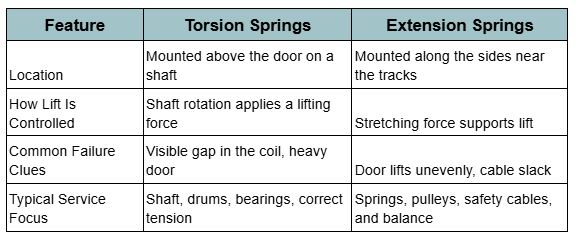
Garage Door Extension Spring Repair Considerations
Extension systems rely on pulleys and safety cables to manage movement. When an extension spring fails or loses correct tension, an expert may check:
- pulley wear and alignment
- safety cable presence and condition
- equal lift on both sides of the door
- track alignment and roller condition
Why Correct Matching Matters
Whether torsion or extension, springs must be sized to the door. A mismatch can cause:
- uneven travel
- frequent reversing
- opener overwork
- faster wear on related parts
A professional recommendation should include the right spring type and sizing for your door and usage needs.
Emergency Garage Door Spring Repair: What To Expect On Service Day
When the door is stuck and you need access restored quickly, emergency garage door spring repair focuses on safety first, then reliable operation.
Step 1: Arrival And Safety Setup
The technician secures the work area, checks the door position, and confirms whether the door can be safely moved during inspection. The goal is to prevent sudden movement while tension is evaluated.
Step 2: System Inspection And Clear Service Plan
Before any parts are changed, the technician confirms:
- spring failure location and system type
- cable condition and drum alignment
- track issues that could affect travel
- opener interaction concerns
Step 3: Service Work And System Balancing
Depending on what the inspection reveals, service may include spring replacement, balance correction, and related hardware adjustments. This is performed with controlled tension handling, using professional tools and methods.
Step 4: Final Safety Checking And Travel Testing
The technician checks that the door:
- travels evenly
- closes consistently
- Reverses correctly when required
- operates smoothly without abnormal strain
If you are trying to decide whether your situation truly requires urgent service or can wait for a standard appointment, read Is Emergency Garage Door Spring Repair Always Necessary?
Garage Door Installation And Spring Repair: When Both Are Addressed Together
Sometimes, spring service happens alongside a larger project, such as garage door installation or a full door replacement. This matters because a new door can change the system’s weight and balance needs.
When both are commonly combined, a door is being replaced due to damage or age-related wear.
- Insulation upgrades changed the door weight
- The hardware is outdated and no longer matches modern door sections
- The opener is being updated, and the system needsa correct balance to support it
Why Springs Must Match The Door
Springs are selected based on door weight, height, and track setup. If the spring system is not correctly matched during installation, daily operation can become inconsistent, and the opener can overwork. Addressing springs as part of the installation scope helps ensure smooth travel and fewer follow-up issues.
Garage Door Spring Repair Cost Factors
Many homeowners want to understand what affects the cost of garage door spring repair. While exact totals vary by home and door design, the average cost may depend on several clear factors:
- Spring type and system design
Torsion and extension systems use different parts and setup requirements. - Door size and weight
Heavier doors often require different spring sizing and may include additional hardware considerations. - Cycle rating and spring quality
Springs can be selected to better match usage needs, which can affect long-term reliability. - Related hardware condition
Cables, drums, bearings, and brackets may need attention if wear is discovered during inspection. - Emergency scheduling and access limitations
If the door is stuck closed and access is limited, service planning can change.
A professional inspection should include a clear explanation of what is included and why, so you understand the scope before work begins.
Why a Professional Inspection Matters
A broken garage door spring is a system-level problem that affects balance, safety, and daily access. The safest path forward is a professional inspection that confirms what failed, checks related parts, and restores smooth, reliable travel without risking more damaged hardware.
At Guardian Door & Gate, we handle garage door spring repair, spring replacement, and emergency garage door spring repair with clear recommendations and complete safety checks. If your door feels heavy, stops mid-travel, or will not close consistently, contact us or give us a call so we can inspect the system and get your garage door operating safely again.
Frequently Asked Questions
Is it safe for us to open the garage door with a broken spring?
We do not recommend forcing the operation. A door with spring failure can move unpredictably and may damage cables, tracks, or opener parts. We can inspect the system and restore a safe balance so that daily use becomes reliable again.
What causes a garage door spring to fail?
Spring failure is often tied to normal cycle wear, corrosion, imbalance, or mismatched sizing for the door’s weight. We inspect for underlying causes so the next spring setup supports smooth travel and steady performance.
Will the opener be damaged if we keep trying to run it?
It can be. Openers are not designed to lift the door without spring support. If spring tension is not carrying the load, the motor and drive system can overwork, leading to damaged internal parts and inconsistent operation.
Do both springs need replacement if only one broke?
In many two-spring systems, we recommend replacing both because the remaining spring is often near the same wear level. That helps restore balanced lifting power and reduces the chance of another failure soon after service.
What is the difference between torsion and extension spring service?
Torsion service focuses on the shaft, drums, bearings, and controlled tension adjustments above the door. The extension service includes pulleys, safety cables, and equal lift checks along both sides. We confirm the system type first, then apply the correct service method.
Can we keep the door closed until service is scheduled?
Yes, and that is often the safest choice when access allows it. We can inspect the system, confirm what failed, and recommend the most reliable path to restore operation without risking additional damaged hardware.
How long does garage door spring replacement usually take?
Time varies by system type, door size, and hardware condition. We focus on safe setup, correct matching, and complete safety checking rather than rushing. After service, we test travel and verify consistent closing performance.
What does emergency garage door spring repair include?
We start with safety setup and inspection, then confirm whether replacement or stabilization is needed. We also check cables, drums, and related parts, then complete travel testing and safety checking so the door runs evenly and closes consistently.
How do we know we are getting the right spring for our door?
Correct matching is based on door weight, height, track setup, and usage needs. We measure and verify balance, so the spring system supports smooth travel and reduces opener strain over time.