When a garage door spring fails, the key question is whether to repair or replace it. The right choice depends on which part of the system failed, how the door is built, and whether related components such as cables and drums are still in good condition. In many cases, the safest approach isn’t the fastest; it’s the option that restores balanced lifting power and consistent closing while minimizing risk.
Professional evaluations consider when repair is possible for spring-related issues that don’t involve a full break, and when full replacement is necessary to ensure long-term reliability and safety. Emergency situations, door type, and system setup also influence the decision and recommended service.
What Repair Means When Homeowners Face a Broken Spring
Homeowners often use the word repair to mean getting the door working again. With garage door springs, the meaning is more specific because springs control lift support, balance, and safe travel.
If you are dealing with a spring failure right now and need a clear next step, read What Should You Do When You Have A Broken Garage Door Spring?
When a Spring Is Snapped, Replacement Is Usually Required
A snapped torsion or extension spring cannot be returned to safe, reliable operation. Springs hold controlled tension to lift a heavy door. When a spring breaks, that lifting support is gone. In most cases, replacement is the correct path because the spring must match door weight, door height, and system configuration.
To confirm the most common failure clues before service is scheduled, read How Do You Know If a Garage Door Spring Is Broken?
When Repair Applies to Spring-Related Problems
There are situations where the spring is not broken, but the spring system still needs professional repair work. Examples include:
- A door that is out of balance because the tension is incorrect
- Cable trouble that causes uneven travel
- A drum alignment issue that affects cable wrap
- Worn bearings or brackets that create resistance similar to spring trouble
- An extension spring system with pulley wear and unstable lift
In these situations, garage door spring repair may involve restoring correct balance and correcting the cause of uneven movement, rather than rebuilding a broken spring.
How Professionals Decide Between Repair and Replacement
A professional recommendation is usually based on a repeatable evaluation process. The goal is to restore safe, stable travel and reduce the chance of repeat issues.
System Condition And Safety Risk
If the spring is broken, the system is immediately out of balance. That changes how the door moves and how load transfers through cables and drums. A professional considers the risk of:
- unstable door travel
- cable slack and uneven wrapping
- opener strain that can lead to damaged internal parts
- Inconsistent closing that affects security
Higher safety risk typically points to replacement as the safer long-term direction.
Spring Type And Configuration
The system type matters:
- Torsion springs are mounted above the door on a shaft
- Extension springs are mounted along the sides near the tracks
A professional checks how the springs work with the rest of the lifting system. On extension setups, pulley condition and safety cable presence are also important.
Door Weight, Usage, And Correct Matching
Springs must match door weight and usage needs. If the door weight has changed due to insulation, door replacement, or section upgrades, the spring setup may no longer match the door. That mismatch often shows up as:
- Reversing during closing
- slow lifting or stopping mid-travel
- uneven travel
- louder operation and opener strain
If the spring setup is mismatched, replacement with correctly matched springs is often the most reliable way to restore smooth travel.
If the door is stuck or cannot close securely while you decide what to do, read Is Emergency Garage Door Spring Repair Always Necessary?
When Garage Door Spring Replacement Is Usually The Best Choice
Replacement is commonly recommended when:
The Spring Is Broken Or Has Visible Coil Separation
A clear break in a torsion spring or a failed extension spring usually calls for replacement. The objective is to restore engineered lifting support and safe balance.
The System Uses Two Springs And One Has Failed
In many two-spring systems, professionals often recommend replacing both springs together. The reason is simple: both springs typically have a similar wear level. Replacing only one can leave the system uneven and increase the chance that the other spring fails soon after.
The Door Has Recurring Balance Problems
If the door repeatedly shows heavy behavior, uneven travel, or opener strain, the issue may be deeper than a single failed spring. Replacement with properly matched springs can resolve the root cause when sizing or wear is a factor.
The Door Weight Or Setup Has Changed
If the door has been upgraded, insulated, or replaced, spring sizing needs to match the current door. Correct matching supports smoother travel and reduces strain on the opener and hardware.
When Garage Door Spring Repair May Be The Right Recommendation
While a snapped spring usually means replacement, repair work may be recommended when the spring is intact but the system is not operating correctly.
The Spring Is Intact, But The Door Is Out Of Balance
A door can behave as if it has a broken spring when the tension is incorrect. A professional checks the balance and lifting behavior to confirm whether the spring is doing its job or whether the system needs correction.
Cable Or Drum Issues Are Causing Uneven Travel
Spring tension affects cable wrap. If cable tension is off, the door can lift crooked, bind, or stop mid-cycle. Repair in these cases may focus on correcting alignment and restoring stable cable behavior.
Hardware Resistance Is Creating Strain
Worn rollers, track alignment issues, and bearing wear can create resistance that looks like spring failure. If the spring is not broken and the root issue is resistance, repair work may focus on those related parts so the door travels smoothly again.
Extension System Issues Affect Lift Stability
With extension springs, pulley wear, and a safety cable setup, stability can influence stability. Repair work may include addressing pulley condition and confirming even lift across both sides of the door.
BobVila explains that garage door spring replacement is a high-risk repair because the springs are under extreme tension, which is why this job is often best handled by a trained professional.
How Emergency Situations Influence The Choice
Emergency calls usually happen when the door cannot move or cannot close securely. In those moments, the priority is restoring controlled movement and reliable closing.
If the spring is broken, replacement is typically the path that restores safe lifting support. If the spring is intact but the system is unstable due to cable or hardware issues, repair work may restore function. Emergency garage door service is not always required, but it becomes important when security or access is compromised.
What To Expect During Professional Service
A professional service visit typically includes:
Inspection And Diagnosis
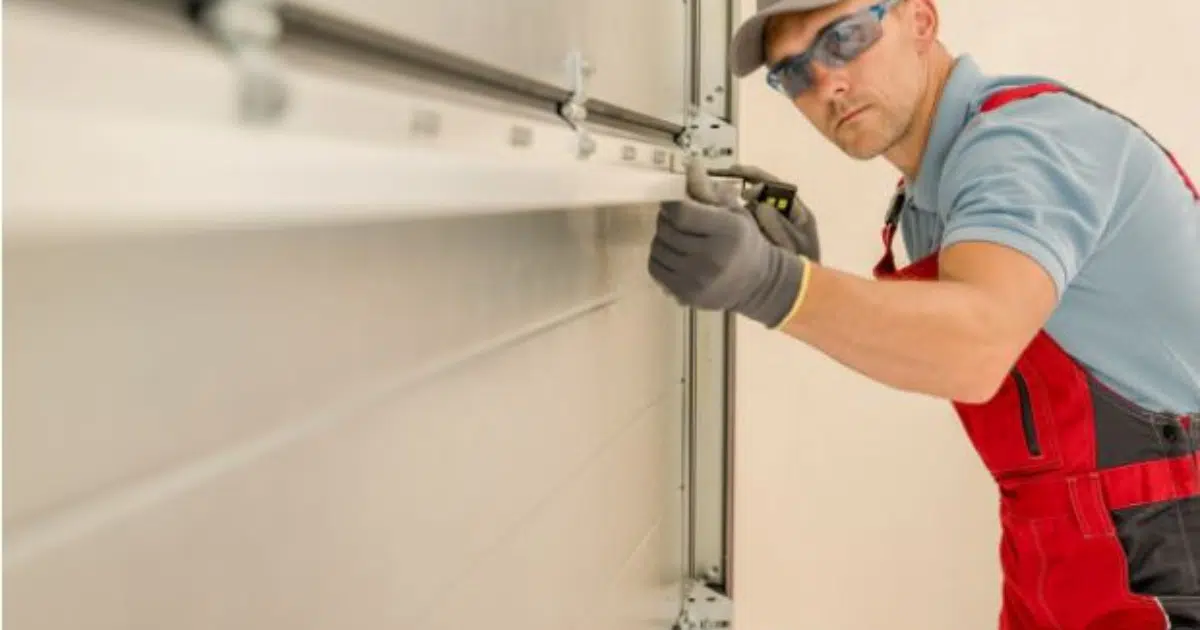
The technician checks the spring system, door balance, cables, drums, bearings, brackets, and travel path. This confirms what failed and what caused the failure.
Clear Recommendation With Scope
You should receive a clear explanation of whether repair or replacement is recommended and what is included. A professional approach focuses on reliability and safety, not short-term operation.
Spring Work And Balance Restoration
If replacement is needed, springs are matched to the door. If repair is needed, the system is corrected so the door travels evenly and closes consistently.
Safety Checking And Travel Testing
After service, the door is tested to confirm smooth travel, consistent closing, and proper safety behavior.
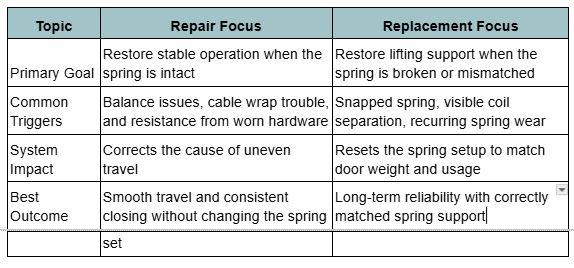
Quick Comparison Table of Repair and Replacement
Making the Right Choice for Your Garage Door Spring
Choosing between garage door spring repair and replacement depends on what actually failed and whether the system is still balanced and stable. When a spring is snapped, replacement is usually the safest and most reliable direction because it restores the lifting support the door needs. When the spring is intact, but the door is unstable due to cable trouble, drum alignment, or hardware resistance, repair work may be the right solution to restore smooth travel and consistent closing.
If your door feels heavy, stops mid-travel, or will not close consistently, Guardian Door & Gate can inspect your garage door spring system and related hardware. Our team evaluates the cause, recommends the safest and most reliable solution, and ensures your door operates smoothly and safely every day. We handle repairs, replacements, and emergency situations with thorough safety checks so you can have confidence in your door’s performance. Contact us or give us a call to schedule service and get your garage door back to dependable operation.
Frequently Asked Questions
Why do professionals often replace both springs?
In two-spring setups, both springs typically have similar wear. Replacing both helps keep lifting strength even on both sides and lowers the chance of another breakdown soon after service.
Can a garage door work with one broken spring?
It might move slightly in some cases, but it is not safe or reliable. The door can become extremely heavy, travel unevenly, and cause the opener to strain. We recommend a professional inspection before the door is operated again. Old House outlines the general garage door spring replacement process and highlights the safety precautions and tools involved before attempting this repair.
How do experts decide the correct spring size?
Spring sizing is matched to the door’s weight, height, track setup, and lift system configuration. Correct sizing supports smooth travel, stable closing, and reduced strain on the opener.
What problems can mimic a broken spring?
Several issues can create similar symptoms, including track misalignment, worn rollers, bearing wear, cable seating or wrap problems, and opener force settings reacting to resistance. A professional inspection confirms the true cause.
Does spring replacement include checking cables and drums?
Yes, spring service commonly includes checking cables, drums, bearings, end brackets, and mounting points. These parts affect safe travel and can contribute to uneven lifting when worn.
What is different for extension spring systems?
Extension spring systems rely on pulleys and even lift across both sides. Service often includes checking pulley wear, confirming safety cable setup, and testing the balance to ensure stable, controlled travel.
Can spring problems damage the opener?
Yes. When spring support is reduced, the opener can overwork to lift the door. Over time, that added strain can reduce reliability and damage internal opener parts.
When is emergency service the right choice?
Emergency service is often the best choice when the door is stuck open, stuck closed, cannot close securely, is hanging unevenly, or the issue affects urgent access or security.
Where can we review the full broken spring process?
We can walk you through the full process during an inspection, including what caused the failure, what parts are affected, and what needs to happen to restore safe, balanced operation. We will also explain what to expect during service and how we test the door afterward to confirm smooth travel and secure closing.