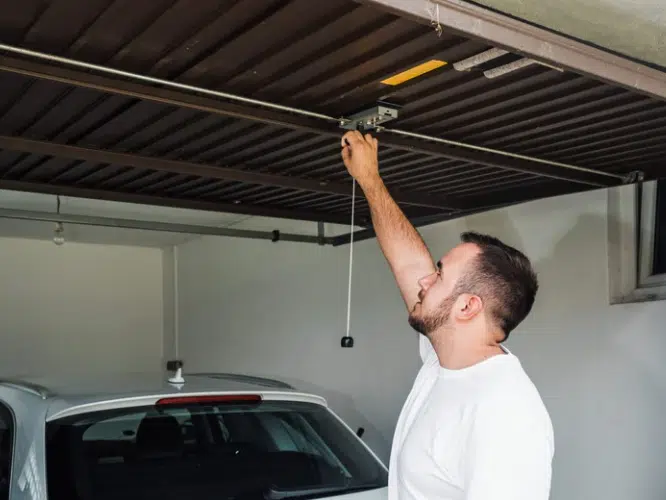
A broken garage door spring can disrupt daily access quickly. The door may stop lifting, travel unevenly, or feel far heavier than normal. Many homeowners assume the opener failed first, but spring failure is one of the most common reasons a door suddenly becomes unreliable.
Knowing the warning signs helps you respond early and reduce the chance of additional damaged parts such as cables, drums, bearings, or track hardware.
The Most Common Signs A Garage Door Spring Is Broken
Spring failure usually shows up through behavior changes, not through a visible break at first glance.
If the door is already stuck or feels unsafe to operate, read What Should You Do When You Have A Broken Garage Door Spring?
These are the signs experts treat as strong indicators:
A Loud Bang Followed By Unreliable Operation
Springs can snap with a sharp sound that resembles a heavy object dropping. After that, the door may stop lifting normally, the opener may struggle, or the door may only move a few inches. Many homeowners notice the bang at night or early morning, then discover the door will not open when it is time to leave.
This matters because that sound is often the moment the spring releases stored energy. Even if the door still moves a little afterward, it can be operating without proper support, which can cause uneven travel and added strain on the opener.
The Door Feels Unusually Heavy
Springs carry much of the lifting load. When spring tension is lost, the door can feel dramatically heavier than usual. That heavy feel is a major clue that the door is no longer balanced.
A balanced door should lift smoothly and stay steady through travel. When the spring is broken, the opener is forced to “do the lifting,” and that is not what it is built to do. The result is a door that feels heavy, slow, or inconsistent.
The Opener Runs, But The Door Barely Moves
You may hear the motor and see the rail or chain move, yet the door stays down or rises slightly and stops. This often happens because the opener cannot lift the door without spring support.
In many cases, the opener is not “dead.” It is reacting to resistance. When the door is too heavy, the opener may stop to protect itself, or it may fail to complete a full open cycle.
The Door Stops Mid-Travel Or Reverses
When the door experiences extra resistance, it may pause or reverse for safety. Spring failure can create that resistance by throwing balance off and increasing the load on the opener.
You may notice the door starts to rise, then drops back down, or it begins to close and then reopens. This behavior can also happen when cables lose proper tension or when the door travels unevenly after spring tension changes.
The Door Travels Unevenly Or Appears Crooked
If tension is no longer equal across the system, the door can rise at an angle. This can also happen when a cable loses proper wrap because the spring tension changes suddenly.
A crooked door can rub the track, increase vibration, and cause noisy travel. Even if the door still opens, uneven movement is a warning sign that should be inspected quickly.
Slack Or Loose Cables Near The Drums
Cables depend on correct tension and alignment. When spring tension drops, cables may appear slack or may not wrap consistently on the drums, which can further affect travel.
Slack cables are a major reliability concern because they can lead to uneven lifting. A professional will check cable condition and drum alignment as part of a complete spring system inspection.
A Visible Gap In A Torsion Spring
On torsion systems mounted above the door, a break often creates a clear separation in the coil. This is one of the easiest confirmation signs when it is visible.
If you can safely see the spring above the door and you notice a clear gap, it is a strong indicator that the spring has snapped. A professional can confirm the failure and evaluate the rest of the system.
Why A Broken Spring Changes Door Safety Right Away
A garage door is heavy, and springs are the primary lifting support. When a spring breaks or loses tension, the system can become unpredictable.
Because this is a safety-sensitive system, IDA’s seasonal inspection reminder for garage doors reinforces why unusual movement and inconsistent travel should trigger a professional check.
Door Movement Can Become Unstable
Without correct spring support, the door may close faster than expected, bind during travel, or stop suddenly. Even if the door still moves, the motion may be inconsistent, which raises safety concerns around daily entry and exit.
This instability is also why spring issues can feel “random.” One day, the door may open partway, and the next day it may not lift at all. That inconsistency often comes from changing resistance as the door shifts during travel.
The Opener Can Strain And Wear Faster
Openers are designed to guide movement, not lift the full door weight. When the spring fails, the motor and drive system may overwork. Over time, that extra strain can lead to damaged internal parts and reduced reliability.
A strained opener may also behave differently than usual, such as stopping early, sounding louder, or operating more slowly. Those are often symptoms of the door being too heavy due to spring failure, not a sign that the opener is the only issue.
Related Hardware Is Often Affected
Spring failure can change how load transfers through the system. That can impact:
- lift cables and cable wrap consistency
- drums and mounting stability
- bearings and end plates
- rollers and track alignment
Because these parts work together, a spring issue can trigger additional wear if the door continues to operate out of balance. A full inspection helps restore smooth travel and consistent closing.
If you are unsure whether the system needs repair work or full replacement, read Should You Repair or Replace a Broken Garage Door Spring?
What An Expert Checks To Confirm Spring Failure
A professional confirms spring failure through inspection and measured evaluation. These are common checkpoints during service:
Door Balance And Lifting Behavior
A technician evaluates whether the door is balanced and whether it travels evenly. Balance evaluation helps confirm whether the spring system is carrying the door correctly.
A balanced door should feel steady through travel and should not feel like it “pulls” to one side. If the balance is off, the technician can identify whether the cause is spring failure, cable trouble, or resistance from track alignment issues.
Spring System Type And Correct Matching
The technician identifies whether the system uses:
- Torsion springs are mounted above the door on a shaft
- Extension springs are mounted along the sides near the tracks
Correct matching matters because springs must match door weight and door height. Mismatched sizing can create repeated reversing, inconsistent closing, and opener strain.
Matching is not only about spring type. It also includes selecting the correct size and strength so the door travels smoothly and closes consistently without the opener fighting resistance.
Cables And Drums
Cables are checked for fraying, slack, and correct wrap. Drums are checked for alignment and secure mounting. Cable issues can be a result of spring failure, and they can also create uneven travel if not addressed.
When cables do not wrap evenly, one side of the door can lift faster than the other. That can cause crooked travel, track rubbing, and higher wear on rollers and brackets.
Bearings, Brackets, And Mounting Points
Worn bearings can create noise and vibration. Loose brackets and mounting points can shift alignment, which changes travel behavior and increases resistance.
These checks matter because even a correctly matched spring can struggle if the door path is not stable. An expert checks these areas to support long-term reliability after service.
Track Alignment And Roller Condition
Track and roller issues can imitate spring problems or make spring wear happen faster. A technician checks alignment, smooth travel, and signs of binding.
If the track is slightly out of alignment or the rollers are worn, the door can drag during travel. That extra resistance can trigger reversing and make the opener work harder than necessary.
If your door cannot close securely or access is urgent, read Is Emergency Garage Door Spring Repair Always Necessary?
Torsion Springs Vs Extension Springs And How The Signs Can Differ
Both systems can fail from wear, corrosion, or imbalance, but homeowners often notice different symptoms.
Signs Often Linked With Torsion Spring Failure
- The opener attempts travel but cannot lift the door
- The door feels extremely heavy during manual travel
- The door may lift a few inches, then stop
- You may see a visible gap in the torsion spring (when broken)
- The door may hang unevenly or stop mid-cycle
Torsion systems use a shaft and drums to lift the door evenly. When a torsion spring breaks, the door can become extremely heavy and may stop moving quickly. A professional will check the full shaft setup, drum alignment, and bearing surfaces to restore stable travel.
Signs Often Linked With Extension Spring Trouble
- uneven lift from side to side
- inconsistent cable tension
- Pulley wear that affects travel stability
Extension systems depend heavily on equal lift across both sides. If one side is not lifting evenly, the door can travel crooked, rub the track, or stop mid-cycle. Inspection includes pulley condition and safety cable presence, so the system returns to consistent operation.
When Emergency Service May Be The Right Next Step
Emergency garage door service may be appropriate when the door is stuck, the door cannot close securely, or access is urgent. Even if the opener still has power, spring failure can prevent safe lifting and consistent closing.
Emergency needs often show up in practical ways. A homeowner may have a vehicle trapped inside, the door may be stuck open, or the door may be partially open and unable to seal. In these situations, the priority is safe assessment and restoring controlled operation so the door can close reliably.
Symptoms And What They Often Indicate
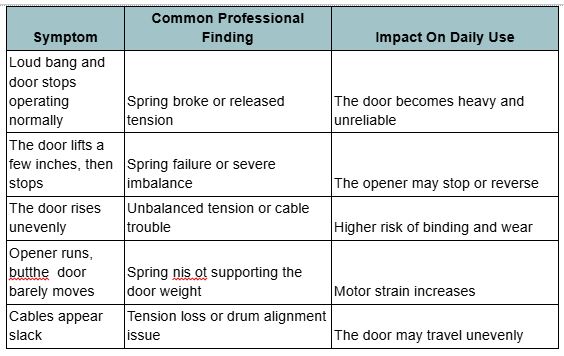
For standards-focused background on why modern operator protection features exist and how requirements evolved, UL Standards & Engagement’s overview of automatic garage door standards adds helpful context.
Keep Your Garage Door Safe and Balanced
A broken garage door spring often reveals itself through a heavy door, uneven travel, mid-cycle stopping, reversing, or an opener that runs without lifting the door. Because springs control lifting under strong tension, the safest next step is a professional inspection that confirms the cause and checks cables, drums, bearings, and door balance for reliable daily operation. Taking action early also helps reduce the chance of additional damaged hardware that can develop when the door continues running out of balance.
If your garage door is stuck, unreliable, or won’t close consistently, Guardian Door & Gate can help. We provide expert spring service with full system inspections and safety checks, ensuring your door operates smoothly and closes reliably every day. Contact us or give us a call to schedule an inspection and get your garage door back to safe, consistent operation.
Frequently Asked Questions
What is the fastest sign a homeowner usually notices?
A loud bang followed by a door that suddenly feels heavy is a common early sign. Another frequent sign is the opener running while the door barely moves.
Can the opener still run even if the spring is broken?
Yes. The opener may power on and attempt travel, but the door may not lift because the spring is no longer providing lifting support. That can create motor strain and inconsistent travel.
Why does the door sometimes rise crooked when a spring fails?
Spring failure can create an uneven lifting force across the system. That imbalance can lead to angled travel and inconsistent closing, especially if a cable loses proper wrap on a drum.
Are loose cables a sign of a broken spring?
They can be. When spring tension changes suddenly, cables can lose tension or wrap inconsistently. A professional inspection confirms whether the spring failure caused the cable issue.
Do torsion springs and extension springs fail the same way?
Both can fail from cycle wear and corrosion, but symptoms can differ. Torsion failures often show coil separation above the door. Extension issues more often present as uneven lift and pulley-related wear.
Should we keep the door closed until service is completed?
If you can keep it closed, that is often the safest choice. A door with spring failure may be heavy and unstable during movement, and forcing travel can lead to additional damage to parts.
What does a professional check besides the spring?
We check cables, drums, bearings, brackets, track alignment, roller condition, and opener interaction. Those checks support smooth travel and consistent closing.
How do we decide between repair and replacement?
That depends on whether the spring is broken, whether the system is correctly matched to the door, and whether related hardware shows wear.
When does emergency garage door spring service make sense?
Emergency service can help when the door is stuck, the door cannot close securely, or access is urgent.