Garage door repair price depends on door type, damage extent, part quality, labor rates, and urgency, and each factor adds or subtracts dollars from the final invoice. Two similar jobs on neighboring doors can produce very different totals because the cost factors behind each quote rarely align.
Parts, labor, and service fees form the foundation of every bill, and the repair type determines how much weight each carries in the total cost. This guide explains how door type, damage, part quality, labor, and urgency change a quote, along with the preparation that leads to a more accurate estimate.
Key Takeaways
- Door type and material set the starting point for part prices
- Extent of damage sets the parts and labor hours a job needs
- Spring and opener details change the price of those specific repairs
- Part quality affects both the upfront price and long-term durability
- Urgency and service fees add to an otherwise standard repair bill
Key Factors That Affect Garage Door Repair Prices
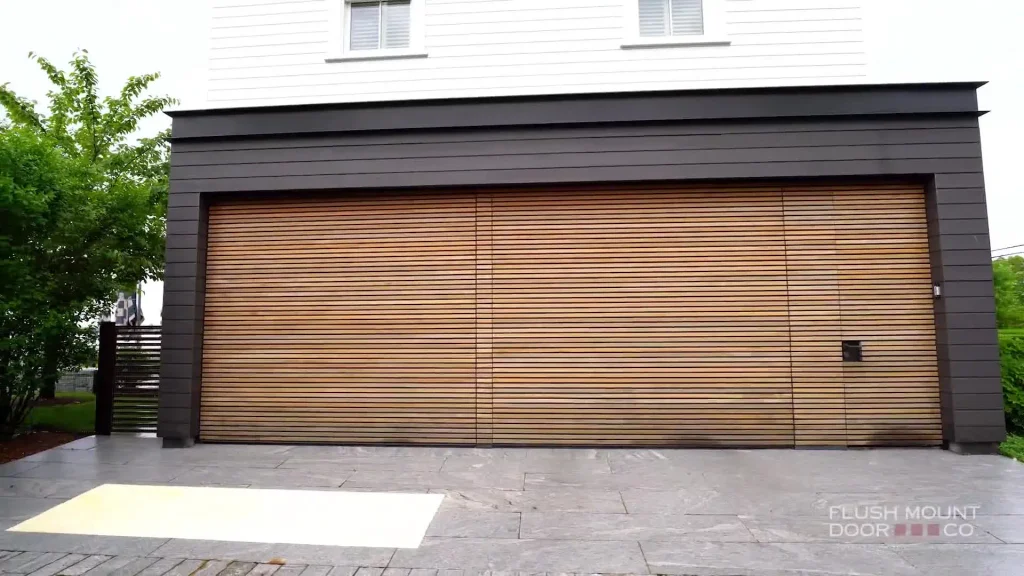
Cost factors determine every quote, whether the job is a common garage door repair or a rare panel job, and each one changes the final invoice.
| Cost Factor | What It Changes in the Bill | Example of the Impact |
| Door type and material | Part prices | Steel panels cost less than wood or glass |
| Extent of damage | Parts and labor hours | One bent section versus several damaged panels |
| Spring type and door weight | Spring size and pair count | Heavier doors need stronger springs |
| Opener type and technology | Part and diagnostic costs | Smart modules cost more than basic controls |
| Part quality and brand | Upfront price and lifespan | Weight-rated cables cost more than basic options |
| Labor rates and service fees | Hours billed and fixed fees | $75 to $150 hourly and a $50 to $75 service call fee |
| Urgency and timing | Added fees | After-hours visits cost more than regular hours |
Placing two quotes side by side and checking them line by line shows which factor accounts for each gap in the cost of garage door repair.
Door Type and Material
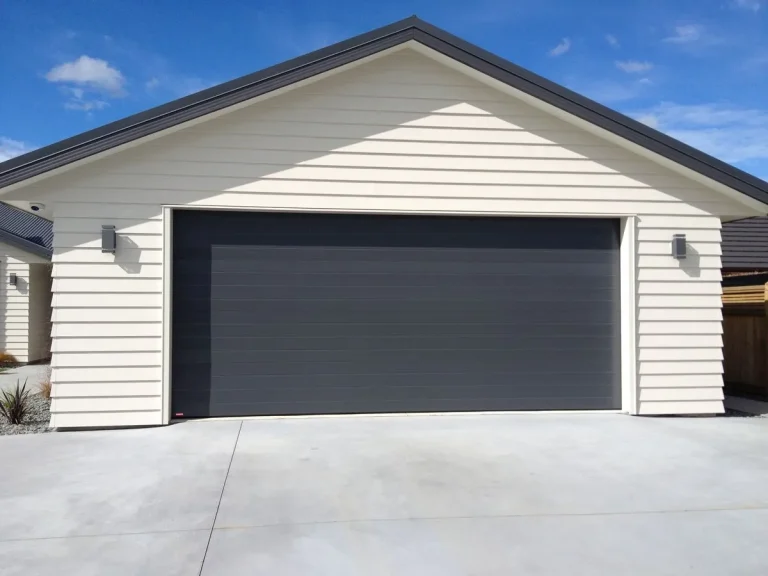
Door type and material set the starting point for part prices, since panels, hardware, and finishes vary widely between styles.
Price differences between doors usually trace back to material and design choices:
- Steel doors cost less to repair than wood or glass styles
- Insulated panels carry higher part prices but support better energy efficiency
- Glass panels and custom doors rank among costly repairs due to special-order parts
- Door style and panel profile limit which replacement parts fit
- Finish and color options influence curb appeal and the touch-up price
Comparing published material and insulation ratings by door style clarifies why a steel panel and a wood panel carry different part prices.
Extent of Damage
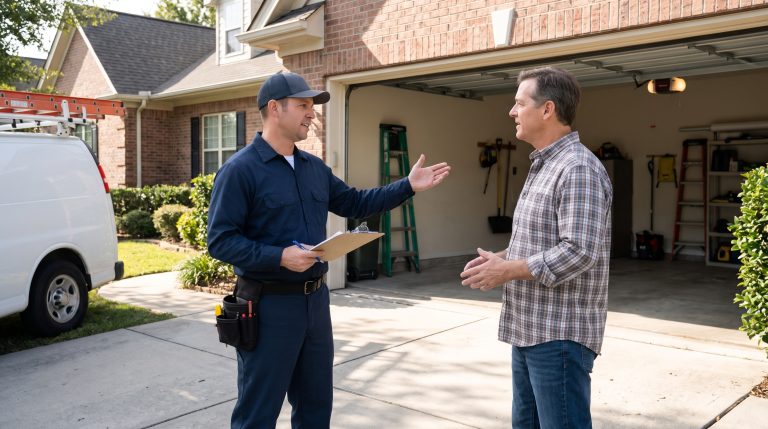
Damage determines how many parts and labor hours a job needs, so the initial garage door system inspection anchors the final price.
Inspection findings influence the quote in these ways:
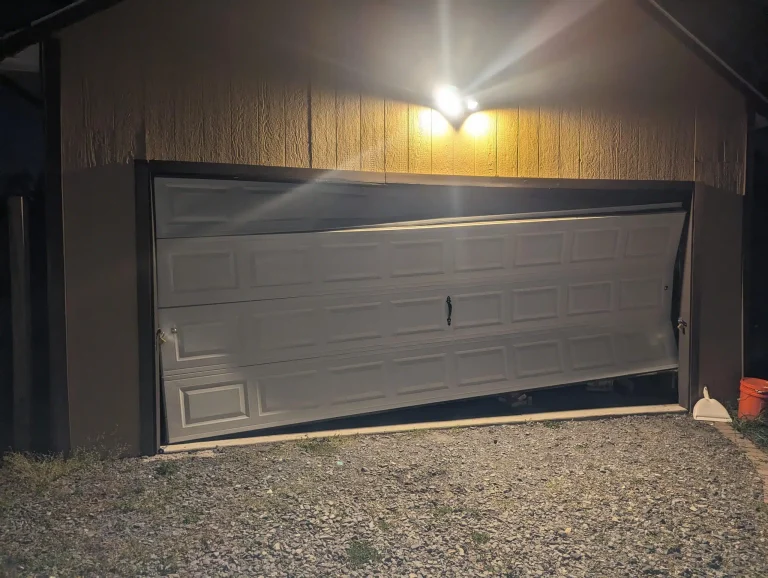
- Visible damage limited to one panel keeps parts and labor low
- Uneven movement often points to several worn parts instead of one
- Cable breaks may bend nearby drums, which adds parts to the list
- Loud noises from the track call for extra diagnostic time
- Minor repairs on one component usually fit into a single short visit
To determine whether the cause of the damage changes who pays for the work, read our guide, Does Insurance Cover Garage Door Repair in St. Louis, MO?, which explains how claims, deductibles, and policy exclusions work.
Spring Type and Door Weight
Spring selection depends on door weight, and spring type and pair count set the largest share of any door spring replacement price.
Pricing for this work depends on a mix of part and labor choices:
- Torsion springs cost more than extension springs but last longer
- Replacing both door springs raises the upfront price while keeping spring tension even
- Heavier doors require stronger parts for garage door spring replacement
- Professional labor limits the risk of serious injuries during removal
- Worn drums replaced alongside a broken spring add to the parts total
Weighing the door first lets a technician size the springs correctly, which sets the quote for broken garage door spring repair before ordering any parts.
Opener Type and Technology
Drive type and added features determine the full scope of work for a garage door opener, which directly affects parts and labor.
Opener quotes shift according to hardware and technology choices:
- Chain, belt, and screw drive units differ in part prices and labor time
- Smart openers with connected modules carry higher part prices
- Circuit board replacement costs more than basic control adjustments
- Remote batteries and keypad replacements add small amounts to the total
- Safety features such as photo eyes get tested after the work
Built-in technology determines whether a garage door opener repair is a quick control swap or a longer diagnostic visit with added parts.
Part Quality and Brand
Part quality affects both the upfront price and the service life of a repair, so the best value depends on durability as well as the lowest price tag.
Gaps between part prices come from points such as these:
- Weight-rated cables raise the part price of garage door cable repair
- Higher cycle-rated springs outlast basic ones but add to the part total
- Manufacturer-approved parts fit the original door without modification
- Warranty length varies by brand and affects value in the long run
- Budget hardware carries a lower price and suits doors with light daily use
To cut part expenses without sacrificing durability or safety features, read our guide, How to Save Money on Garage Door Repair in St. Louis, MO, which details quote comparisons, bundled visits, and warranty checks.
Labor Rates and Service Fees
Labor rates and service fees form a fixed layer under every garage door service visit, and both vary between garage door companies.
Billing details that shape the total include the following:
- Local labor rates run from $75 to $150 per hour for professional technicians
- A service call fee of $50 to $75 may count toward approved work
- Transparent pricing lists parts on their own line of the written estimate
- Longer diagnostic time adds labor costs even when the repair stays simple
- Travel distance and scheduling windows influence response time and fees
To compare labor rates and service fees against typical price ranges for each repair, read our guide on How Much Does Garage Door Repair Cost in St. Louis, MO?, which lays out every price range and the average cost of each repair in detail.
Urgency and After-Hours Service
Urgency adds fees to an otherwise standard repair, since fast scheduling pulls technicians away from regular appointments.
Timing affects the final price through conditions like these:
- After-hours visits carry added service fees on top of standard rates
- Same-day requests narrow the choice of available technicians
- Faster response time often brings a higher dispatch charge
- Weekend and holiday calls follow separate rate schedules at many companies
- A door stuck open creates a security risk that justifies urgent dispatch
Dispatch speed comes at a price, so emergency garage door repair quotes should state the after-hours fee before the technician leaves the shop.
Details to Share Before a Repair Quote
Technicians price a job based on the information available on the first call, so precise details lead to a quote that holds up on arrival.
Information worth gathering before the call covers:
- Symptoms like loud noises or uneven movement guide the diagnosis
- Door type, style, and installation date narrow the parts list
- Photos of visible damage to panels, tracks, or the entire door support a closer estimate
- Maintenance records and past DIY installation work reveal the repair history
- Right questions about the service call fee and warranty belong in the call
Itemized written estimates that list parts, labor, and fees give homeowners a clear basis for comparing one quote against another before approving work.
Cost Factors Explain Why Repair Quotes Differ
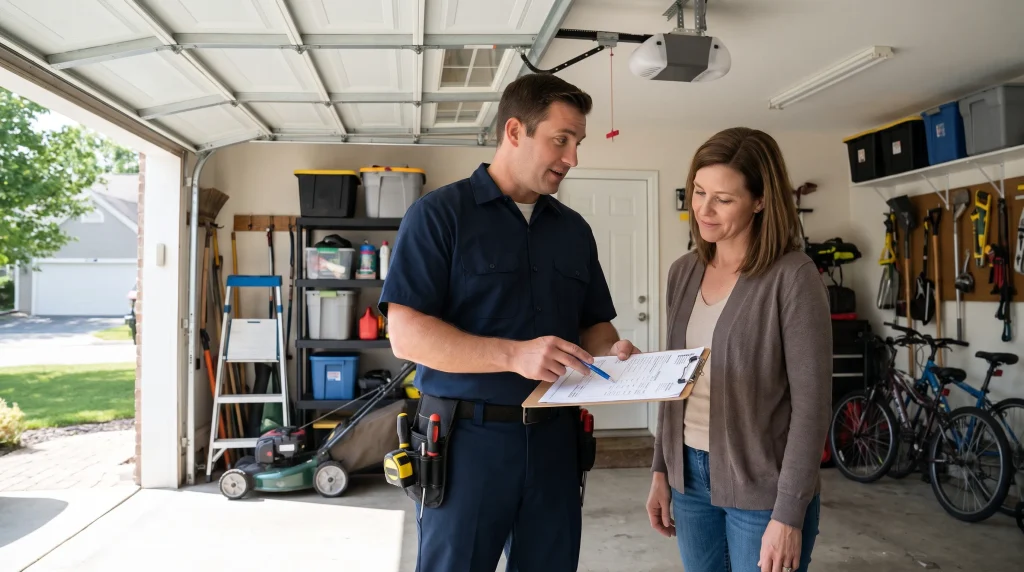
Repair prices depend on key factors for each job, from door type and damage extent to part quality and visit timing. Knowing which of those details apply before approving work lets a homeowner compare quotes fairly, question unclear charges, and approve the job with peace of mind.
Guardian Door & Gate brings hands-on expertise with springs, cables, openers, and panels to every repair completed for homeowners across St. Louis, MO, from the first inspection to the final test. Contact us or give us a call today to schedule an inspection and get a clear explanation of the repair price.
Frequently Asked Questions
Does cold weather change garage door repair cost?
Rates usually stay the same in winter, though cold stiffens springs and lubricants and brings more service calls to technicians. Booking early in the day keeps the visit inside regular hours and avoids added after-hours fees.
Can discontinued parts change the price of a repair?
Parts no longer in production must be special-ordered or substituted, which adds waiting time and can raise the final price. Comparing the quote with the cost of a garage door replacement helps you decide whether repair still makes sense for that door.
Is a second opinion worth getting on a high quote?
Getting a second quote for the same parts and labor shows whether a high price reflects the job itself or the company’s pricing. The short wait is worth it when two quotes differ widely for identical work.
Can a repair price change after the technician starts work?
Prices change only when the technician finds additional damage not visible during the initial door inspection. Reputable companies explain the new finding in plain terms and get approval before adding anything to the invoice.
Do extended warranties lower future repair costs?
Extended warranties lower out-of-pocket costs only for the parts and labor the plan covers, so read the coverage terms carefully before you buy. Wear items such as rollers are often excluded, and regular maintenance records may be required to keep coverage valid for future claims.
Does repeat damage to the same part change the price?
Repeat failures of one part usually point to an underlying cause, such as a misaligned track, that needs its own repair before the new part goes in. Fixing the cause first prevents paying twice for the same part and the same labor.
Do technician certifications affect labor rates?
Certified technicians may charge higher labor rates, though their training reduces diagnostic errors and repeat return visits. Verifying certification before booking shows what the hourly rate includes and what experience stands behind it.
Does door height change the price of a repair?
Taller doors and double doors need longer cables, longer tracks, and sometimes stronger springs, which raises parts costs and labor time. Standard-height doors usually keep parts costs lower because replacements are widely stocked by suppliers.
How long does a written estimate stay valid?
Validity varies by company, and asking for the expiration date upfront keeps the quoted price reliable for the entire planning period. Part prices can shift between the quote and the visit, so many estimates include a firm time limit that homeowners should confirm in writing.