A commercial security gate typically takes anywhere from a few days to a couple of weeks to install, depending on gate type, site conditions, and permitting requirements. Larger properties, custom gates, and advanced automation systems tend to push that timeline closer to the longer end of the range.
Planning around a realistic gate installation schedule helps a business avoid unexpected delays once work begins on site, especially across the different types of commercial gates available today. This guide breaks down each phase of the process in detail, along with the specific factors that most often extend or shorten the total timeline.
Key Takeaways
- Most commercial gate installations take a few days to a couple of weeks total
- Permitting often adds more time to the schedule than the physical install itself
- Gate type and automation systems both affect the total timeline significantly
- Custom gates and larger properties typically extend the schedule further
- Final testing and calibration remain the last step before a gate goes live
Key Phases and Timelines
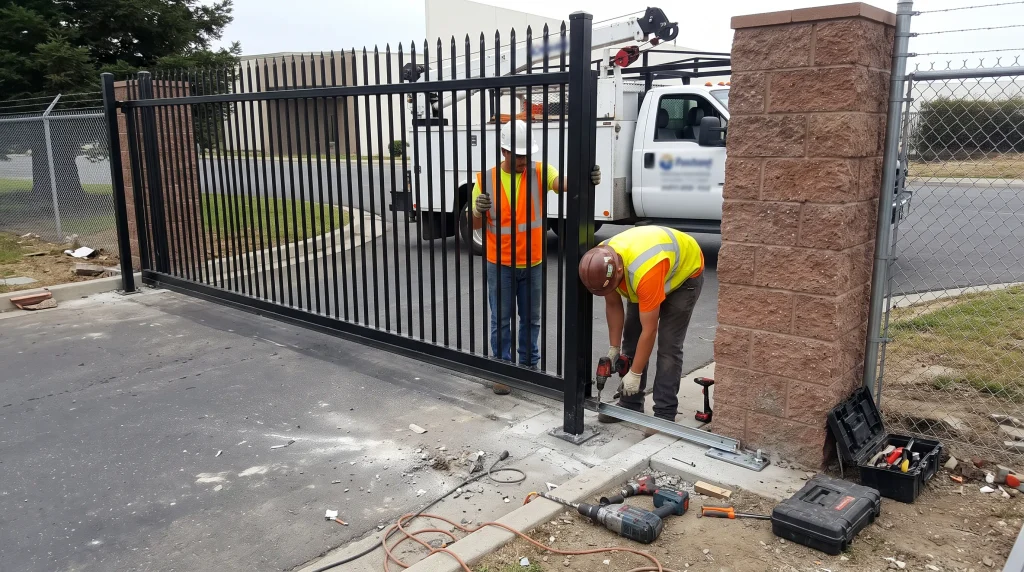
Every commercial gate installation moves through the same general phases, though the time each one takes varies by property and gate type.
| Installation Stage | What Happens | Typical Time Required |
| Planning and permits | Design approval and municipal permitting | 1 to 2 weeks |
| Site prep and foundation | Digging posts and curing concrete | 1 to 3 days |
| Electrical and automation setup | Wiring motors, sensors, and keypads | 1 to 2 days |
| Physical gate mounting | Hanging panels, tracks, and alignment | 1 to 2 days |
| Testing and adjustments | Safety checks and final calibration | A few hours to a full day |
Planning and Permits
Planning and permits typically take one to two weeks and cover the design approval and municipal paperwork that need clearing before physical work starts.
Getting through this phase generally involves:
- Confirming local zoning rules that apply to the property’s specific type of gate
- Submitting permit applications, which vary widely by municipal jurisdiction
- Finalizing the exact gate type and materials before ordering begins
- Reviewing site plans against fire department access requirements
- Waiting on permit approval, which often takes longer than any other single step
To weigh how the gate type chosen at this stage shapes every phase that follows, read our guide on How to Choose the Right Security Gate for Commercial Property, which walks through every factor in order.
Site Prep and Foundation
Site prep and foundation work usually takes one to three days and gets the ground ready to support the gate’s weight and daily movement.
Crews handling this phase generally focus on:
- Digging post holes to the exact depth the gate type requires
- Pouring and curing concrete footings before any hardware gets mounted
- Grading the ground to keep water away from the gate’s base
- Running conduit beneath the surface for future wiring needs
- Clearing debris or obstructions along the gate’s planned path
A solid foundation poured correctly at this early stage prevents most gate repair calls tied to shifting or settling ground later on site.
Electrical and Automation Setup
Electrical and automation setup typically takes one to two days and brings power, sensors, and access hardware online before the gate itself gets mounted.
Technicians working through this phase typically handle:
- Running electrical service to the gate’s control panel and motor
- Installing access control systems like keypads, card readers, or intercom systems
- Wiring safety sensors and loop detectors into the control box
- Connecting automation systems that manage remote access and scheduling
- Testing power delivery before the physical gate gets mounted
To compare how much this setup differs across sliding gates, swing gates, and the other types of commercial gates, read our guide on Types of Security Gates Used for Commercial Property, which breaks down every option in detail.
Physical Gate Mounting
Physical gate mounting typically takes one to two days and is where the gate panels, tracks, and hardware finally go in place on the prepared foundation.
Installers completing this phase focus on:
- Hanging gate panels on their tracks, hinges, or pivot points
- Aligning the gate carefully to confirm smooth operation from day one
- Mounting the operator motor and connecting it to the gate mechanism
- Installing warning signage at the correct height on both sides
- Confirming gate automation components sync correctly with the mounted hardware
Careful alignment during mounting sets the foundation for smooth, reliable daily operation once the gate finally goes live on site.
Testing and Adjustments
Testing and adjustments typically take a few hours to a full day and confirm every safety and access system works correctly before daily use begins.
Technicians running this final phase generally cover:
- Testing photo-electric sensors and reversing edges for proper response
- Confirming the manual release functions during a simulated power loss
- Checking alignment and travel across a full open and close cycle
- Verifying UL 325 compliance across every installed safety feature
- Walking through operation with staff before the property takes over daily use
To weigh which specific safety features get verified during this final phase, read our guide on What Safety Features Should a Commercial Security Gate Have?, which covers each requirement in complete detail.
Factors Affecting the Installation Schedule
A handful of practical decisions made early in the process tend to shape how quickly the entire installation actually moves forward.
The most useful steps to keep things on track include:
- Confirming permits and approvals as early as possible in the process
- Choosing a gate type that is already in stock rather than custom ordered
- Scheduling site prep work around seasonal weather conditions
- Coordinating electrical work with the installer well before the mounting date
- Requesting a written timeline that includes every phase and access control component
Addressing these decisions early on consistently keeps a commercial gate installation on track from permitting through final testing.
The Right Timeline Depends on the Property’s Setup
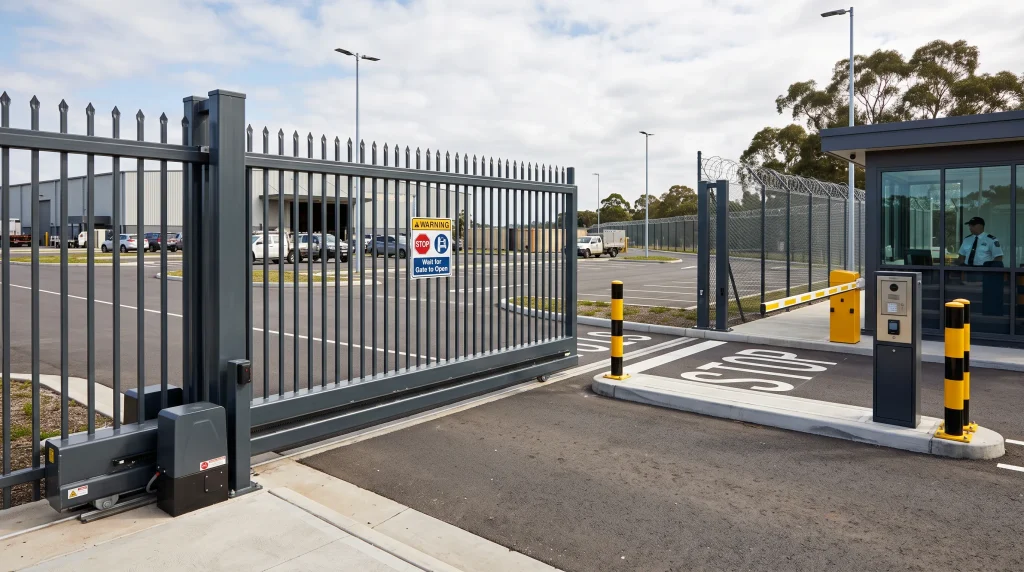
A commercial security gate installation rarely follows the exact same schedule from one property to the next, since permitting, site conditions, and gate type all shift the total timeline. Planning around a realistic range from the start keeps a business from expecting a finished gate sooner than the process actually allows.
Guardian Door and Gate walks every property across St. Louis, MO through a clear, phase by phase installation timeline before any physical work on site ever begins. Contact us or give us a call today, and let our team map out exactly how long a specific commercial gate installation will take from start to finish.
Frequently Asked Questions
What causes a commercial gate installation to take longer than expected?
Permitting delays, custom gate orders, and unexpected site conditions are the most common reasons an installation process runs longer than planned. Weather delays during site prep can also push the schedule back by several days.
Does permitting add significant time to a gate installation?
Permitting often takes one to two weeks on its own, which frequently makes it the longest single phase across the entire gate system setup. Municipal approval times vary widely depending on security requirements tied to the property's local jurisdiction.
Is a custom gate slower to install than a standard model?
A custom gate typically takes longer than a standard model, since materials often need to be ordered and fabricated before installation can begin. Standard gate options already in stock, including pivot gates or a slide gate, move through the mounting phase much faster.
How much time does site preparation usually add to the schedule?
Site preparation, including digging posts and curing concrete, generally adds one to three days to the total installation schedule. Ground conditions and limited space on site can extend this phase beyond the typical range.
Can a commercial gate be installed in phases to reduce downtime?
A commercial gate can often be installed in phases, allowing a business to maintain partial vehicle access through key access points while work continues on the remaining sections. This approach works especially well for office complexes or industrial facilities with multiple entry points.
Does weather affect how long an installation takes?
Weather can significantly affect site prep and foundation work, since concrete curing and ground digging both depend on stable conditions. Extreme heat, cold, or heavy rain often push these phases back by several days.
How long does final testing and calibration usually take?
Final testing and calibration usually take a few hours to a full day, depending on how many safety features and surveillance systems need verification. Properties with advanced access control typically need the longer end of that range.
What can a business do to keep an installation on schedule?
Confirming permits early and choosing a gate type that best suits the property are two of the most effective ways to stay on schedule. Requesting a detailed written timeline from a qualified gate installer also gives a clearer level of security and timing to plan around.
Should a business expect delays with automated or custom gate systems?
Automated or security gate systems with custom features often take longer to install than standard vertical lift gates or manual gates, largely due to additional wiring and calibration requirements. Planning for this extra time upfront gives a business genuine peace of mind instead of an unrealistic turnaround expectation.