A commercial security gate needs motion detection, an automatic response system, a manual override, warning alerts, and access safeguards to operate safely. These features matter more on a commercial gate than a residential one, since higher vehicle access volume and employee traffic raise the stakes when a gate fails to react correctly.
Confirming access control integrates properly with these safety systems protects both the property and every person passing through it on a daily basis. This guide breaks down each safety feature category in complete detail, along with what separates a compliant commercial gate from one that falls short.
Key Takeaways
- Detection systems stop a gate before it makes contact with a person or vehicle
- Automatic response systems reverse the gate the instant resistance gets detected
- A manual release keeps a gate usable during a power outage or fire
- Warning signs and alarms protect anyone nearby while the gate is moving
- Access safeguards keep unauthorized entry from slipping through with an approved user
Safety Features Every Commercial Security Gate Needs
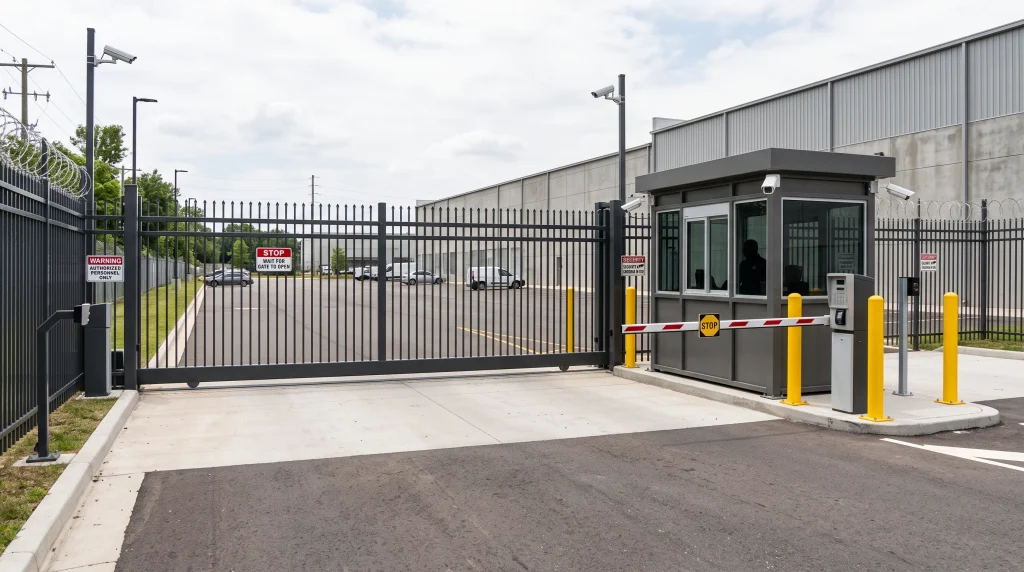
A commercial gate system depends on several safety categories working together, not just one standalone feature.
| Safety Feature Category | What It Protects Against | Typical Response Time |
| Motion and contact detection | Entrapment or impact with a person or vehicle | Immediate, under 1 second |
| Automatic response systems | Continued gate movement after contact occurs | Immediate reversal on trigger |
| Manual overrides | Being locked out during a power outage or fire | Seconds, once accessed |
| Warning and alert systems | Pedestrians unaware a gate is in motion | Active before and during movement |
| Access and entry safeguards | Unauthorized entry through an open gate | Continuous while gate is active |
Motion and Contact Detection
Motion and contact detection features sense a person, vehicle, or object in the gate’s path before contact ever happens.
This category typically includes:
- Photo-electric sensors that trigger a stop when a light beam gets broken
- Reversing edges that sense contact along the leading edge and reverse instantly
- Vehicle loop detectors that hold the gate open while a car sits underneath
- Infrared sensors positioned at multiple heights to catch vehicles and pedestrians
- Pressure sensitive mats placed near entry points for added ground level coverage
To compare how these detection features get built into sliding gates, swing gates, and the other types of commercial gates, read our guide on Types of Security Gates Used for Commercial Property, which breaks down every option in detail.
Automatic Response Systems
Automatic response systems act on what the detection features sense, reversing or stopping the gate before an injury occurs.
The core components in this category include:
- Automatic reversal that drives the gate backward once resistance is detected
- An entrapment control box that shuts down movement if a sensor fails
- Fail-safe programming that defaults to stopped rather than closing on error
- Redundant wiring between sensors and the control box to prevent failure
- Self-diagnostic alerts that flag a failing sensor before it misses a detection
A response system that flags resistance early on consistently keeps minor sensor issues from ever requiring a full gate repair visit on site.
Manual Overrides and Emergency Access
Manual overrides give people a way to move the gate by hand when power fails or an emergency demands immediate access.
The most common override options include:
- A key release that lets staff disengage the motor and move the gate by hand
- A chain release that provides the same manual function on heavier gate types
- A lever release built for fire crews needing fast access during an emergency
- Battery backup systems that keep automation running briefly during a short outage
- Clearly labeled release points so staff can locate them quickly under pressure
Properties relying on gate automation for daily operation still need a reliable manual option for the moments automation cannot handle.
Warning and Alert Systems
Warning and alert systems tell pedestrians and drivers that a gate is about to move or is already in motion.
This category generally covers:
- Warning signs posted on both sides of the gate with clear, visible danger notices
- Audible alarms that sound in the seconds before the gate begins moving
- Flashing lights that signal movement to anyone nearby who might not hear an alarm over ambient noise
- Painted ground markings that outline the gate’s swing or slide path
- Reflective tape along the gate edge to improve visibility at night
Confirming these alerts function correctly matters just as much during initial gate installation as it does years later.
Access and Entry Safeguards
Access and entry safeguards control who can trigger the gate to open, closing a security gap detection alone cannot solve.
The main safeguards in this category include:
- Access control integration through keypads, card readers, or intercoms
- Anti-tailgating systems that detect and block a second vehicle following an authorized one
- Logging features that record every entry attempt for later security review
- Time based restrictions that limit certain credentials to specific hours or days
- Remote lockout options that let management disable a lost or stolen credential instantly
To weigh how these safeguards factor into choosing the right security gate for commercial property, read our guide on How to Choose the Right Security Gate for Commercial Property, which walks through every factor in order.
Confirming a Gate Meets Commercial Safety Requirements
Verifying compliance before relying on a gate day to day protects both the business and everyone who passes through its entry points.
The most useful steps include:
- Requesting compliance documentation directly from the gate manufacturer or installer
- Scheduling a full safety inspection covering every sensor and response system
- Testing the manual release to confirm staff can operate it under pressure
- Reviewing warning sign and alarm placement against current UL 325 requirements
- Confirming access control credentials are current and unauthorized users have been removed
To map out how long these safety checks add to a full commercial gate installation, read our guide on How Long Does It Take to Install a Commercial Security Gate?, which lays out realistic timelines from start to finish.
Safety Features Are Not Optional on a Commercial Gate
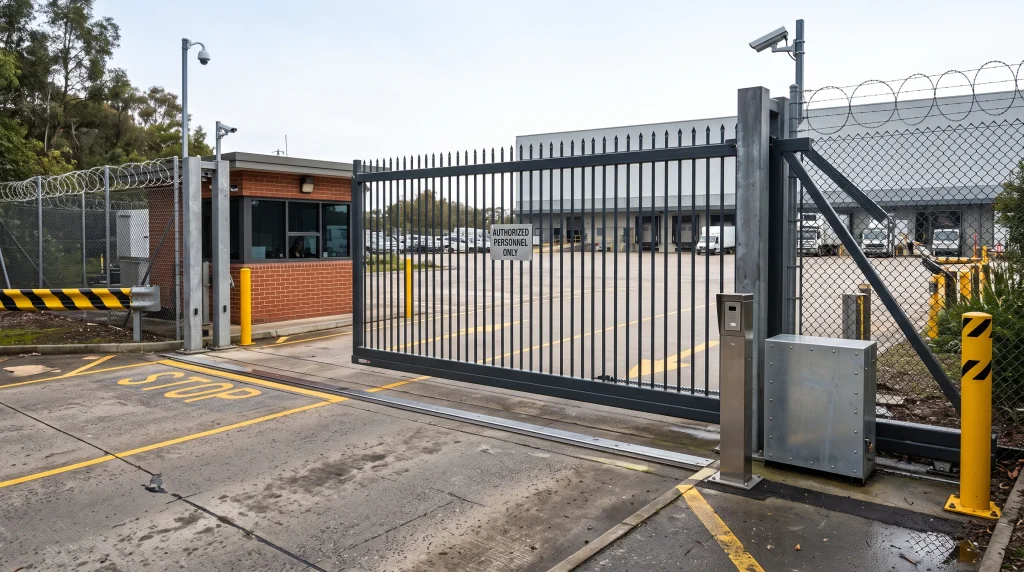
A commercial security gate without proper detection, response, and warning systems puts employees, visitors, and vehicles at real risk every single day it continues to operate. Omitting these features to save on upfront installation cost tends to create far greater liability exposure for the business.
Guardian Door and Gate builds every commercial gate installation around the exact safety features a property’s specific traffic volume and layout actually require. Contact us or give us a call today, and let our team confirm exactly which safety systems belong on a specific commercial gate.
Frequently Asked Questions
How does a photo-electric sensor prevent injury?
A photo-electric sensor sends a beam of light across the gate's path and triggers an immediate stop if anything breaks that beam. This stops the gate from closing on a person or vehicle before contact ever happens near vehicle access points.
What happens if a commercial gate loses power?
A commercial gate with a proper manual release lets staff disengage the motor and move the gate by hand during a power outage. Gates without this feature can leave office complexes or industrial facilities inaccessible until power returns.
Are commercial gates held to different safety standards than residential gates?
Commercial gates face stricter security requirements than residential gates due to higher vehicle access volume and employee or visitor traffic. A separate guide breaks down residential gate safety features for properties with more limited space and simpler security needs.
How often should safety sensors be tested?
Safety sensors should be tested at least once a month to confirm they still trigger a stop or reversal correctly. Properties with high traffic flow often benefit from more frequent testing to catch wear before it causes a failure.
What is a reversing edge and how does it work?
A reversing edge is a rubber sensor strip along the gate's leading edge that detects physical contact and reverses the gate immediately. This gives pivot gates, vertical lift gates, and slide gates a backup layer of protection beyond photo-electric coverage alone.
Can a business be held liable for an unsafe gate?
A business can face real liability if an unsafe commercial security gate causes injury to an employee, visitor, or vehicle. Maintaining documented compliance with current security measures helps protect business operations if an incident ever occurs.
Do commercial gates need warning signage by law?
Commercial gates typically need warning signage posted on both sides under current UL 325 requirements and local building codes. Signage helps pedestrian gates and vehicle entry points stay visible before anyone approaches an active gate system.
How does access control tie into gate safety?
Advanced access control and intercom systems limit who can trigger a gate to open, reducing the chance of unauthorized access near pedestrians. Pairing access systems with video surveillance integration and security personnel creates a more complete level of security overall.
What should a business ask an installer about safety compliance?
A qualified gate installer should provide documented proof that all sensors, response systems, and signage meet current UL 325 standards. Confirming the installer tests these systems throughout the installation process, not just during setup, helps close any gaps in perimeter security.