Access control systems improve building security, simplify entry management, and give property owners better control over who enters their space. This shift away from traditional locks and physical keys creates real advantages that most people do not fully consider until they compare the two side by side.
The benefits go beyond simply locking a door, since a modern system tracks activity, adjusts permissions, and responds to changing security needs in ways a physical key never could. Understanding these advantages helps property owners see why so many are moving away from outdated entry methods for good.
How Does an Access Control System Work?
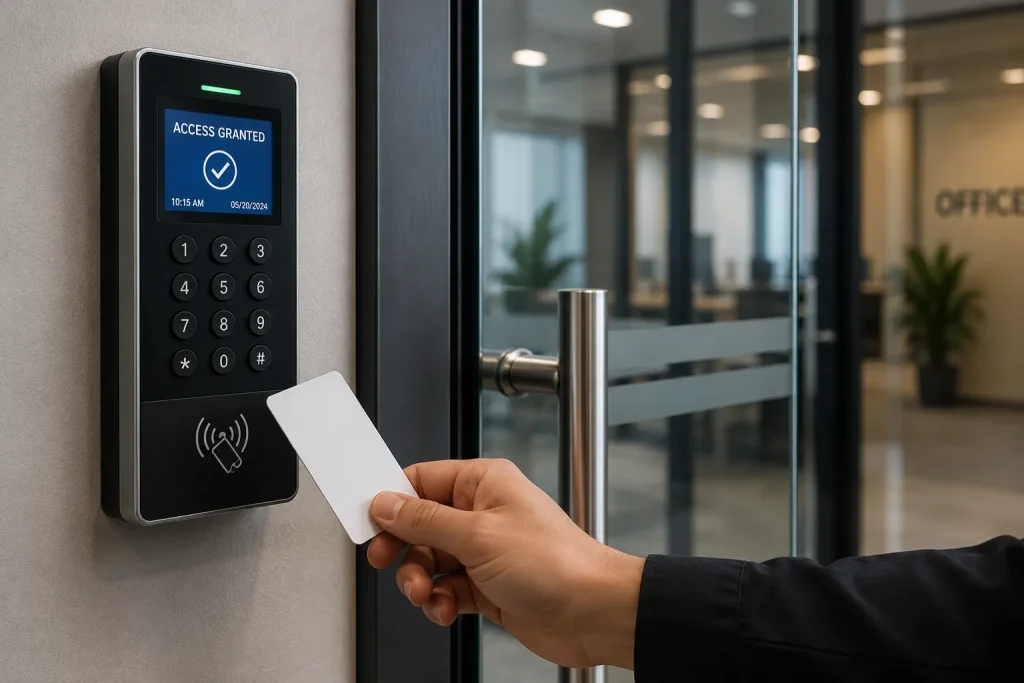
A property relies on more than a single lock to stay secure, since real protection depends on how well each entry point verifies a person’s identity before granting access and records that activity for later review.
Common elements that make up a typical access control setup include:
- A card reader, keypad, or biometric scanner captures the credential at the entry point
- A door controller compares that credential against stored access rights
- The system unlocks the door once the credential passes verification
- Every attempt gets logged with a timestamp for later review
- Facilities with sensitive information often add extra verification steps for stricter control
To understand how this verification process adds an extra layer of confirmation, read our guide on How Do Smart Intercoms Integrate with Access Control Systems?, which explains how visual and audio checks work alongside credential-based entry.
Which Access Control Types Offer the Strongest Protection?
Access control systems come in several forms, each offering a different level of protection depending on the credentials and technology used.
| Type | How It Works | Best For |
| Card access system | A physical card or key fob is tapped or swiped at a reader | Offices and buildings with many users |
| Keyless entry system | A PIN code or mobile credential replaces a physical key | Properties wanting fewer physical credentials |
| Biometric scanner | Fingerprints or facial recognition confirm identity | High security areas needing strict verification |
| Mobile access control | A smartphone app communicates with the door controller | Owners who want remote management |
| Combined high security setup | Two or more methods are used together for entry | Data centers and other sensitive areas |
To compare which of these options provides the highest level of protection, read our guide on What Type of Access Control System Is Most Secure?, which explains how each method holds up against common security risks.
What Key Advantages Do Access Control Systems Provide?
Enhanced Security and Asset Protection
Restricting entry to sensitive areas keeps valuable equipment and confidential documents out of the hands of anyone without approved credentials.
This level of protection matters most in situations like:
- Shared keys that make it impossible to trace who entered a space
- Unauthorized visitors reaching areas meant for staff only
- Theft or tampering goes unnoticed until damage is already done
- Lost credentials that stay active long after they should be revoked
- Weak points where a single key opens far too many doors
Properties adding a perimeter layer often pair this protection with newgate installation, extending the same level of control to vehicle entry points.
Real-Time Monitoring and Activity Logs
Every entry attempt gets recorded automatically, giving property managers a clear timeline of who accessed which area and when.
Property managers rely on this visibility to solve problems such as:
- No way to confirm who entered a building after hours
- Denied entry attempts go unnoticed without a digital record
- Difficulty proving access history during a dispute or investigation
- Reports that take hours to compile using outdated methods
- Suspicious patterns are going unnoticed without automated alerts
Property managers gain a full picture of building activity without needing to walk the property or ask staff for updates.
Operational Efficiency and Reduced Administrative Work
Digital credentials remove the daily hassle tied to managing physical keys across a growing staff or tenant base.
Daily tasks that become easier under this setup include:
- Issuing new credentials for incoming employees or tenants
- Deactivating lost cards without changing every lock in a building
- Granting short-term access to contractors or delivery staff
- Tracking who currently holds an active credential
- Managing multiple entry points from a single dashboard
Front desk staff and property managers spend far less time on tasks that once required a physical key exchange.
Customized Access Levels by Role or Schedule
Setting permissions by department, job title, or shift keeps each person limited to the areas they actually need.
Flexible scheduling like this supports situations such as:
- Executive areas limited to senior staff only
- Night shift access that expires once a shift ends
- Seasonal workers receiving credentials that end on a set date
- Departments kept separate from areas outside their role
- Temporary elevated access for special projects or events
Businesses with layered staffing needs get a level of control that a single master key could never provide.
Visitor and Vendor Access Management
Guests and vendors move through a building more smoothly when temporary credentials replace manual sign-in sheets.
Front desk operations improve most in areas like:
- Visitor badges that expire automatically after a set period
- Vendor access limited to approved entry points only
- Front desk staff freed from tracking paper visitor logs
- Delivery personnel granted access without a staff escort
- Guest activity still appears in the system’s records
Properties with vehicle traffic often extend this same control throughgate automation, keeping deliveries and guest arrivals just as organized at the perimeter.
System Integrations With Cameras and Alarms
Connecting access control with video surveillance and alarm systems creates a single security picture instead of several disconnected tools.
A connected setup like this proves useful in scenarios such as:
- Camera footage tied directly to a specific entry log
- Alarms trigger automatically during unapproved entry attempts
- Intrusion detection working alongside door-level verification
- Fewer false alarms thanks to cross verification between systems
- One centralized dashboard covering every connected security tool
Keeping every connected component in working order, including routinegate repair, helps this integrated system stay reliable over time.
What Types of Businesses Gain the Most From Access Control Systems?
Property layout, tenant volume, and the sensitivity of stored information all influence how much value a business gains from access control.
Businesses that benefit most include:
- Multi-tenant residential and commercial buildings with shared entry points
- Office buildings separating general access from executive-level areas
- Warehouses restricting entry to inventory storage zones
- Facilities handling sensitive information under strict internal policies
- Properties managing frequent staff turnover across multiple departments
To explore specific situations where an access control upgrade makes the most sense, read our guide on Who Needs an Access Control System?, which breaks down the signs a property is ready for this change.
What Trade-Offs Should Be Considered With Access Control Systems?
Access control systems bring strong benefits, but property owners should weigh a few practical factors before committing to an upgrade.
Trade-offs worth considering include:
- Upfront investment that varies based on building size and credential type
- Reliance on power and internet connectivity for full functionality
- A short adjustment period as staff learn the new system
- Ongoing software or subscription costs, depending on the provider
- Coordination needed across multiple entry points during installation
None of these factors typically outweighs the long-term security and convenience access control systems bring to a property once fully installed and in daily use.
What Should Buyers Look for When Choosing a System?
Choosing the right access control system means looking past price alone and focusing on long-term fit for the property.
Key factors to evaluate include:
- Compatibility with existing cameras, alarms, and door hardware
- Ability to scale as staff, tenants, or entry points increase
- Remote access control for managing permissions from anywhere
- Clear pricing for future upgrades or added users
- Vendor support available during and after installation
Buyers who compare these factors closely end up with a system that continues to serve the property well as its needs evolve over time.
How Can Property Owners Get the Most Value From Their System?
Getting full value from an access control system takes more than installation, and ongoing attention keeps it performing well for years to come.
Practices that help maintain long-term value include:
- Testing door controllers and card readers on a regular schedule
- Checking backup batteries according to manufacturer guidelines
- Applying software updates as soon as they become available
- Removing outdated credentials for former employees or tenants
- Reviewing access permissions whenever a role or schedule changes
Property owners who stay consistent with these habits get more years of reliable use out of their system with fewer unexpected issues.
Access Control Systems Deliver Long-Term Value for Every Property
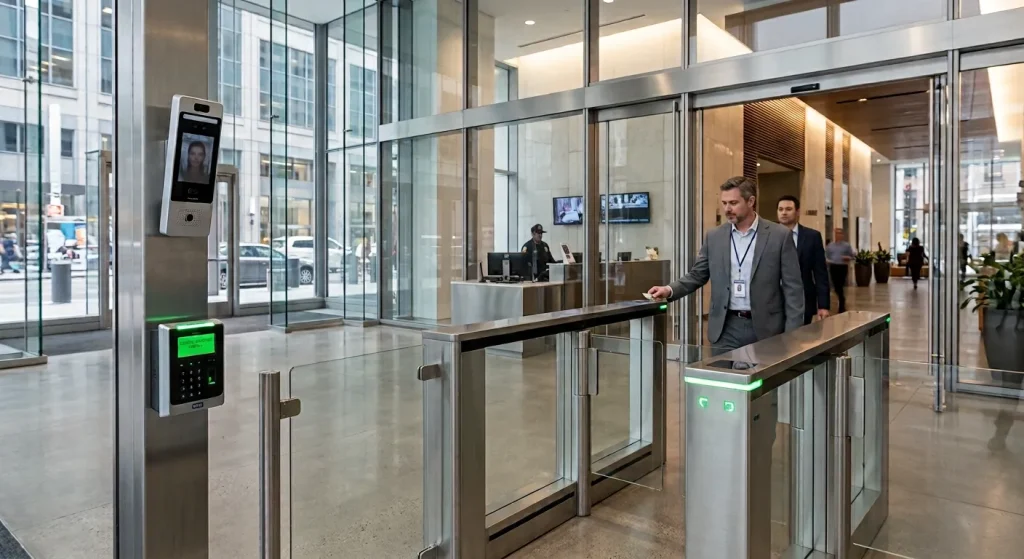
Access control systems provide property owners with a practical way to strengthen building security while simplifying daily operations at every entry point. These systems replace outdated locks with tools that offer more control, better tracking, and greater flexibility for homes and businesses alike.
Guardian Door & Gate helps property owners throughout St. Louis, MO, choose and install access control systems built around their specific security needs and long-term goals. Contact us or give us a call today, and let our team find the right system to keep your property secure for years to come.
Frequently Asked Questions
Do access control systems help during employee disputes or investigations?
Yes. Detailed access logs confirm exactly who entered a specific area and when, creating a reliable record that holds up under scrutiny. This record often resolves disagreements faster than relying on memory or witness accounts alone.
Can an access control intercom help reduce false alarms?
Yes. Visual confirmation before entry lets staff rule out simple misunderstandings before they turn into false alerts that require a response. This extra step saves time that would otherwise be spent on unnecessary responses or wasted trips to the door.
Do access control systems improve the experience for repeat visitors?
Yes. Remote access control allows staff to pre-approve regular visitors before they even arrive on site, reducing wait times at the door. This creates a faster, smoother entry process for people who frequently visit the same property.
Can a keyless entry system support multiple properties under one owner?
Yes. A single platform allows a single owner or management company to oversee permissions across multiple locations at once, even as portfolios grow. This centralized setup removes the need to manage separate systems for each individual property.
Does a video intercom system help with delivery management?
Yes. Staff can visually confirm a delivery driver before granting entry to the building, adding a layer of certainty beyond a simple buzz-in. This reduces the chance of unauthorized individuals gaining access under the pretense of a delivery.
Can access control systems support businesses with seasonal staffing changes?
Yes. A smart intercom system paired with scheduled credentials keeps entry organized even as staff numbers shift throughout the year and workloads change. This removes the need to manually track who currently holds active access at any given time.
Do features of commercial intercom systems help with front-desk efficiency?
Yes. A commercial intercom system handles routine entries via automated verification, allowing staff to focus on tasks requiring personal attention rather than on repetitive check-ins. This shift often improves the overall front-desk workflow and reduces repetitive daily tasks.
Can access control systems be monitored remotely?
Yes. Property owners and managers can review activity without being physically present at the building, even while traveling or managing other sites. This flexibility enables faster decisions whenever the system flags unusual activity.
Can access control systems be customized for shared building amenities?
Yes. A card access system tracks exactly who used shared spaces, such as gyms or common areas, and when, giving property managers a clear record. An intercom access control setup can provide the same visibility at shared entry points leading to those amenities.